Best Incense for Yoga and Meditation: 9 Aromatic Options for a Peaceful Practice
Incense is the fastest way to make a spare room behave like a studio: one lit stick changes what a space feels like before a single pose is held. Choosing among the best incense for yoga and meditation is therefore less about fragrance vocabulary than about format, burn length, smoke volume and what a room can tolerate, decisions that look very different in an apartment with a ceiling fan than in a barn studio with the doors thrown open.
Two traditions dominate this shelf. Indian agarbatti, hand-rolled onto a bamboo core, arrives in weight-measured boxes, burns for 35 to 45 minutes per stick, and carries the sweet masala scents that most people picture as yoga incense. Japanese incense skips the core entirely, burns faster at 25 to 30 minutes, reads subtler in a room, and is where the craft houses live, some of them quoting centuries of family recipes on the box. Between them sit formats: wooden bricks, sample packs of twelve scents, and tins that include their own holder.
Burn math matters more than marketing. A 45-minute masala stick is a full savasana plus a conversation; a 25-minute Japanese stick is one class’s worth of atmosphere with less residue. Everything below reports its listing’s own grams, stick counts, burn minutes and included hardware, so choosing among the best incense for yoga and meditation becomes arithmetic rather than guesswork.
Quick Picks
Best Overall: Satya Sai Baba Nag Champa Agarbatti — the aisle’s benchmark 250g box of hand-rolled masala sticks, made in India and sold by weight.
👉 Light the Satya Box on Amazon
Best Budget: HEM Meditation Incense Sticks — six boxes, 120 sticks, 301 grams total and a 35 to 45 minute burn, wrapped around a seated Buddha.
👉 Grab the HEM Six-Pack on Amazon
Best Craft: Shoyeido Moss Garden Nokiba — Kyoto incense made without a support core under family recipes the brand dates at 300 years, in a dispenser box.
👉 Treat the Studio to the Shoyeido Box on Amazon
Best Kit: Nippon Kodo Kayuragi — 40 sandalwood sticks plus an incense holder in one box, each stick burning around 25 minutes with no bamboo core.
👉 Choose the Kayuragi Kit on Amazon
Comparison Table
| Product Name | Best For | Price Range | Check Price on Amazon |
|---|---|---|---|
| Satya Sai Baba Nag Champa Agarbatti | Sweet masala benchmark, sold by weight | Budget | Check Price on Amazon |
| HEM Meditation Incense Sticks | 120 hand-rolled sticks in six boxes | Budget | View Deal on Amazon |
| Shoyeido Moss Garden Nokiba | Coreless Kyoto craft, 30-minute burns | Mid | See Offer |
| Goloka Nag Champa 250 GM Box | Same genre, proceeds to charity | Mid | Check Offer |
| Nippon Kodo Kayuragi Sandalwood | Sticks and holder in one tin | Mid | View Option |
| Morning Star Sandalwood Incense | 200 sticks plus a small holder | Mid | See Details |
| Raajsee Assorted Herbal Incense | Twelve scents to find your one | Premium | Explore Listing |
| Incienso de Santa Fe Piñon Bricks | Resinous wood smoke, American made | Budget | Browse the Deal |
| Gonesh Classic No. 8 Spring Mist | A small gold box to start with | Budget | Compare Options |
Buyer’s Guide
1. Two Ways to Build a Stick
Indian agarbatti wraps a masala paste around a bamboo skewer, which gives it the structural burn time the listings here quote at 35 to 45 minutes and the warm, sweet projection most studios picture. Japanese incense is solid paste with no core at all: Shoyeido describes a patented technology delivering pure essence without the waste of a support core, Nippon Kodo lists no bamboo core for a clean burning, pure scent, and both land at roughly 25 to 30 minutes per stick. Longer, fuller burn suits an open room; shorter, lighter smoke suits a shared one.
2. Burn Minutes Decide Your Class Length
The math a studio actually runs on is minutes per stick against minutes per session. A 45-minute Goloka or Raajsee stick covers an hour-long flow start to finish with a single light, then keeps smoking through the last ten breaths. A 25-minute Nippon Kodo or Morning Star stick is a half-class scent, or the second stick of an hour, depending on where you want the fade. Morning Star and Raajsee both frame their blends around home and office use, which in practice means the shorter Japanese burns land easier with roommates and landlords.
3. Sold by Weight, Counted by Hope
Only some of these listings publish a stick count, and it changes the shopping experience. Satya and Goloka sell 250-gram boxes with no number of sticks stated, because hand-rolled agarbatti varies pack to pack; HEM lists 120 sticks and 301 grams across six boxes; Shoyeido states its box count and a 5.25-inch stick length; Raajsee estimates about 150 sticks across twelve 15-gram packs. A weight-only purchase means judging how much incense you own by the shake of the box, which is authentic to the craft and mildly infuriating to a replenishment schedule.
4. Holders, Bricks and Room Rules
Two products here ship with hardware: Nippon Kodo’s tin contains 40 sticks and an incense holder, and Morning Star’s description says the box comes with 200 sandalwood sticks and one incense holder. Everything else expects a dish, and Santa Fe’s Piñon product is honest about it right in the title, bricks without holder. Ash is the unglamorous variable in a room of bare floors and white walls, so either pick the stick short enough for the space or buy the kit that arrives ready to light.
One Mistake to Avoid: Treating a 45-Minute Masala Like a Five-Minute Candle
The most common way to ruin a good incense habit is to light the longest, sweetest stick available in the smallest, least ventilated room, halfway through a heated flow, and then blame the incense for the headache. Deep-burning masala is built for a wind-down, an open doorway and a full class of air movement; the 25-minute Japanese sticks exist precisely so someone in a studio apartment can have scent without smoke inventory. Start short, start ventilated, and let the 45-minute boxes earn the room later.
Best Incense for Yoga and Meditation: 9 Aromatic Options for a Peaceful Practice
Nine listings follow in the supplied order: the Satya Nag Champa benchmark, HEM’s Meditation six-pack, Shoyeido’s Moss Garden, Goloka’s charity-backed 250g box, Nippon Kodo’s Kayuragi tin, Morning Star’s sandalwood bulk, Raajsee’s twelve-scent sampler, Santa Fe’s Piñon bricks and Gonesh’s little gold No. 8. Each review quotes only what its live page publishes, and where a listing sells by weight without promising a stick count, the review says exactly that.
1. Satya Sai Baba Nag Champa Agarbatti, 250g Box
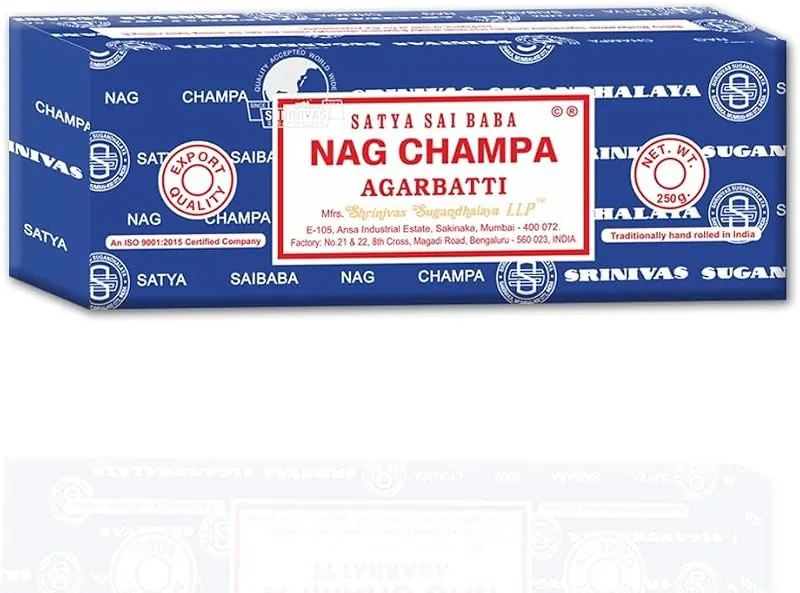
Best for: The reference Nag Champa, bought by the gram.
- The Box Everyone Knows: The blue carton printed SATTYA SAI BABA NAG CHAMPA AGARBATTI is the visual default of the whole category, and this listing is the 250g version of it.
- Sold as Weight, Not Count: The bullet states Quantity: 1 x 250 grams box, with no stick total published, because hand-rolled sticks vary.
- Hand Rolled, Export Grade: The title’s claim is Hand Rolled Fine Quality, and the bullets stack Handmade plus Export quality on top of it, with no ingredient detail anywhere.
- The Title Is the Use List: Purification, Relaxation, Positivity, Yoga, Meditation, the five occasions Satya prints across the top of the carton copy.
- Made in India, Stated Flatly: A single closing bullet, Made in India, the origin line the brand leads with rather than buries.
Pros:
- One box covers months of nightly practice
- The flavor every other champa is compared against
- No variant maze, just the 250-gram carton
Cons:
- No burn minutes or stick count published on the page
- Weight-based buying means counting what is left by feel
- A famous label invites knockoffs elsewhere, so buy the listing, not the photo
2. HEM Meditation Incense Sticks, 6-Pack of 20
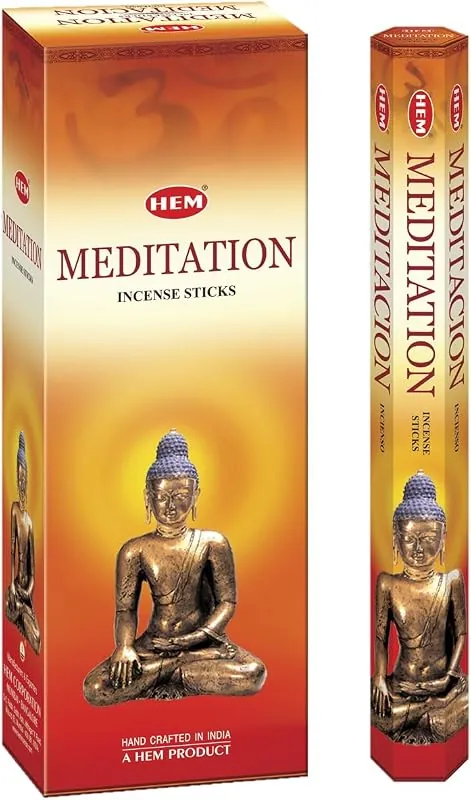
Best for: Maximum stick count without leaving the hand-rolled genre.
- 120 Sticks, Six Boxes: The listing box contains 6 pack of 120 sticks (20 sticks each) with a burning time of 35-45 minutes per stick, weight and arithmetic in one sentence.
- Meditation as the Named Scent: The page sells focus, alertness and a mystical scent that instantly purifies the air, framing the box before any note-by-note vocabulary.
- Stress Relief in the Brand’s Words: Our authentic hand-rolled incense sticks create soothing aromas relaxing your mind, a relief language the listing publishes as its own bullet.
- A Built-in Ritual Use: Cleansing aura, eradicating negativity and promoting space is the brand’s usage bullet, closer to how studios actually talk about opening a class.
- Ingredient Honesty: The organic blend bullet lists charcoal, essential oils, fragrance oils, herbs, flowers and resins, fragrance oils included in the same sentence.
Pros:
- 301 grams of sticks with a stated per-stick burn window
- The box art commits to the meditation use outright
- Splitting six boxes makes sharing or gifting easy
Cons:
- A single scent across all 120 sticks, no sampler inside
- The page’s organic blend claim still includes fragrance oils by name
- No holder in this listing, plan a dish
Stock the HEM Six-Pack on Amazon
3. Shoyeido Moss Garden Nokiba Incense, 250 Sticks
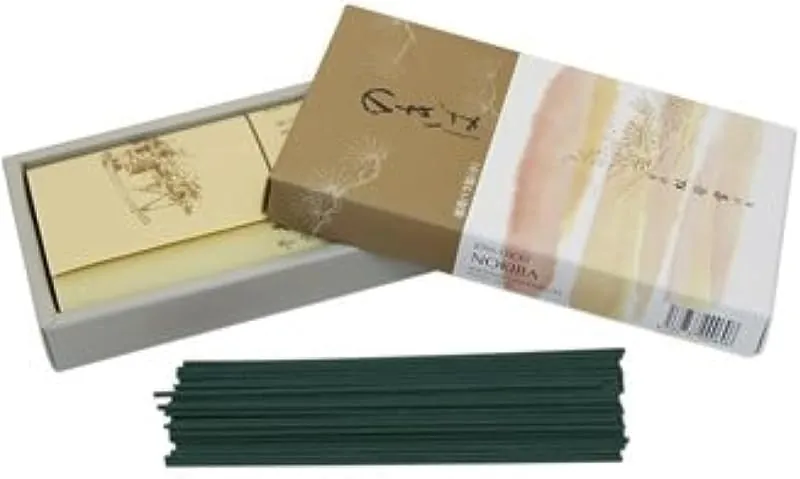
Best for: Kyoto craft incense for people who dislike heavy smoke.
- No Support Core: The listing highlights a patented new technology exclusive to Shoyeido, delivering pure essence without waste of a support core, the structural difference you smell.
- 30 Minutes, 5.25 Inches: Approximate burn time per stick is 30 minutes at 5.25 inches long, sized for a half-class or a desk session.
- A 300-Year Recipe Line: Shoyeido incenses are made in and imported from Kyoto, Japan using 300 year old and exclusive family-owned recipes, stated as the brand’s pedigree.
- All Natural, No Bitterness: The page promises pure aromas with no bitterness, no synthetic oils or fragrances, the Japanese house style against perfume-forward smoke.
- One Listing Quirk: The bullet block opens with 500 sticks while the selected size reads 250 sticks, the same listing carrying both box sizes, so check the picker before buying.
Pros:
- Coreless burn reads light enough for shared buildings
- Moss Garden, Nokiba, is the green, quiet end of the catalog
- Shorter 30-minute sticks leave room for a second later
Cons:
- The 500-versus-250 stick bullet needs the size selection to make sense
- Dispenser box, not a tin, and no holder inside
- Subtle scents disappoint anyone chasing a filled-room effect
Order the Moss Garden Box on Amazon
4. Goloka Nag Champa Incense, 250 GM Box
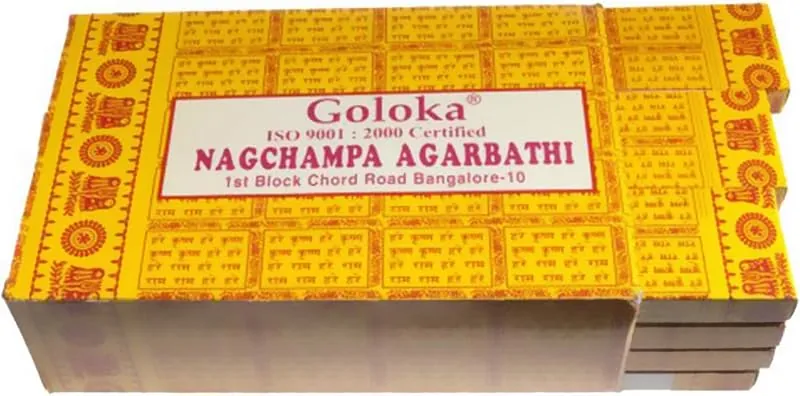
Best for: The champa genre with a charitable return built in.
- Same Genre, Yellow Box: Goloka’s 250 GM agarbathi is the other big Nag Champa staple, the yellow carton with maroon label sitting across the aisle from Satya’s blue one.
- Forty-Five Minutes, Published: Each natural stick burns for 45 mins (indoor environment) at 8 to 8.5 inches long and 0.1 inch thick, the full geometry in one bullet.
- The Masala Recipe, Listed: A unique blend of Sandalwood, Natural Resins, Herbs, Flowers with aromatic wood powders, described as 100% natural, herbal and toxic-free.
- Proceeds Go to Charity: All proceeds from the product’s distribution are used 100% for charitable activities, the brand’s own economics printed as a product feature.
- Certification on the Carton: The box itself is printed ISO 9001:2000 certified, a manufacturing standard the packaging shows rather than hides.
Pros:
- A 250g box sized like the category standard, with the burn minutes attached
- The charity line gives the bulk buy a reason beyond quantity
- Usage list runs from yoga, Reiki and healing to spa and wedding
Cons:
- No stick count published, weight is the only unit
- The cert print is ISO 9001:2000, an edition the brand keeps on the box
- Sold through assorted third-party distributors, delivery windows vary
Unbox the Goloka 250g on Amazon
5. Nippon Kodo Kayuragi Sandalwood Incense, 40 Sticks with Holder
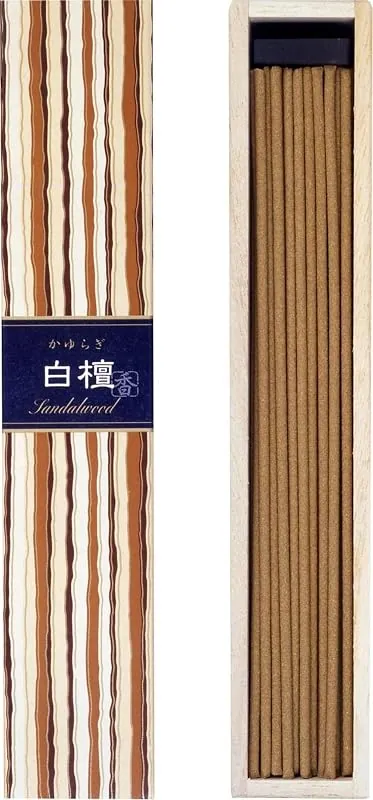
Best for: The complete kit, tin and holder included.
- Everything in One Box: Contains 40 sticks and an incense holder, the listing’s second bullet, the no-accessories-needed promise in seven words.
- Twenty-Five Minutes Each: Burns for approx. 25 min, sized to a class cool-down, the shortest stated stick here alongside its morning star counterpart.
- Coreless by Design: No bamboo core for a clean burning, pure scent, the Japanese construction that keeps a small room livable.
- Sandalwood, Quietly Sold: The title keeps its claim simple, Sandalwood, Japanese Quality Incense, with the HAKU-ORI label on the box doing the rest.
- Pocket-Sized Package: At 1 3/16 x 6 5/16 x 15/16 inches, the tin is the exact size of a hardcover, which is how it earns a spot in a bag.
Pros:
- The holder included line makes it a true starter kit
- Sandalwood reads calmer than sweet masala in shared air
- Slim tin travels to studio or retreat without a box of sticks
Cons:
- Forty sticks is one box, not a bulk buy
- Twenty-five minutes per stick may mean two lights for an hour class
- The listing prints its holder as generic, no material stated
Add the Kayuragi Tin to the Kit on Amazon
6. Morning Star Sandalwood Incense, 200 Sticks with Holder
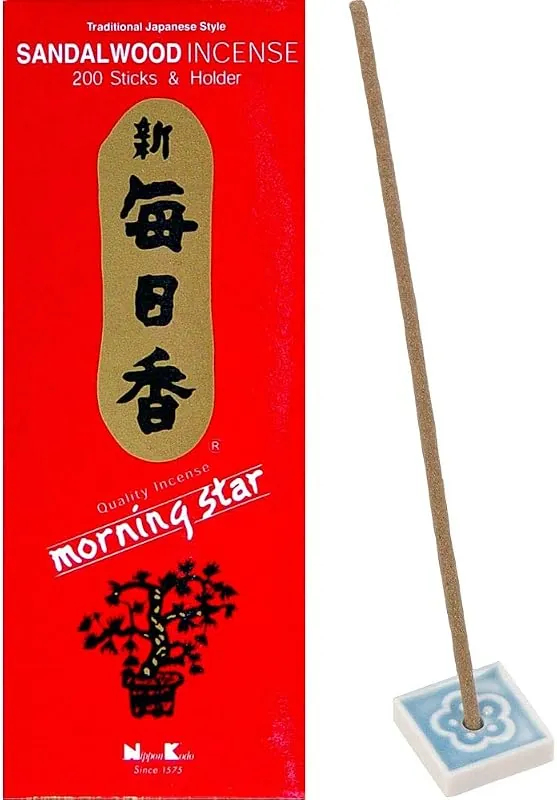
Best for: Japanese-style volume for daily-burn households.
- 200 and a Holder: The box comes with 200 Sandalwood incense sticks and one incense holder, per the listing’s own description, bulk plus hardware in one package.
- Traditional Japanese Style: The page keeps its identity sentence simple, traditional Japanese style incense, quality incense, sold for home and office tranquility.
- Twenty-Five Minute Burn: Approx 25 minutes per stick, the same cadence as the other Kyoto-style listings, quick enough to light without deciding.
- Sandaled Scent Only: Sandalwood incense, used to enhance tranquillity and serenity, the single-note lane with no champa sweetness.
- Office-Proof Framing: The description targets tranquility and serenity to home or office, the quiet-smoke case in the brand’s own words.
Pros:
- Two hundred sticks is the category’s true bulk size
- Holder included means lit the day it arrives
- Short, clean burn suits apartments and shared desks
Cons:
- The holder is one small tile for a very big box
- No stick length or core detail published
- Pure sandalwood reads mild next to a masala room filler
Settle Into the Morning Star on Amazon
7. Raajsee Assorted Herbal and Floral Incense, 12 Pack
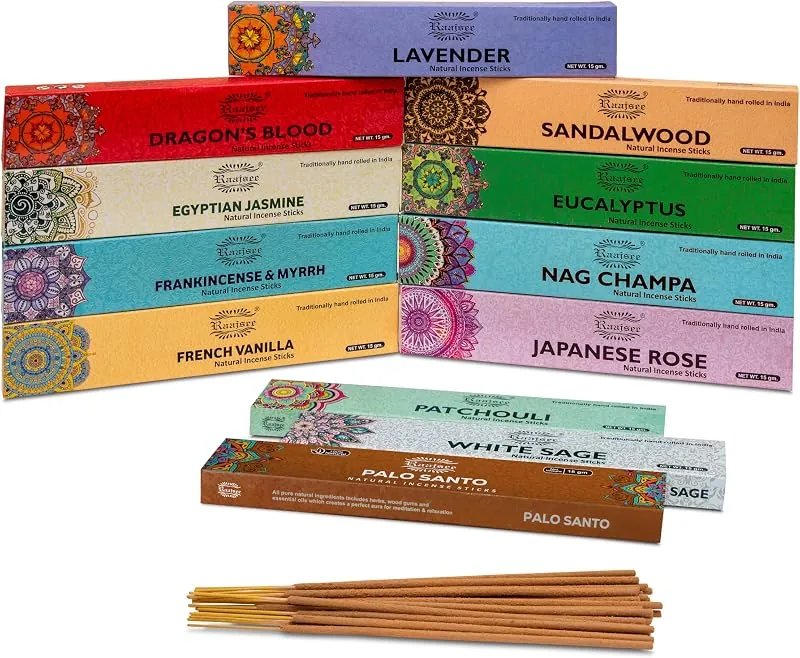
Best for: Finding your scent with twelve already bought.
- Twelve Boxes, One Verdict: The set of twelve variety pack spans Nag Champa, Palo Santo, White Sage, Lavender, Sandalwood, Patchouli, Japanese Rose, Dragon’s Blood, Egyptian Jasmine, Frankincense and Myrrh, French Vanilla and Eucalyptus, each box labeled in its own color.
- Forty-Five Minutes Each: 15g x 12 Pack (Approx. 150 sticks Total), burning for 45 minutes indoor, the same long-burn arithmetic as the big single-scent boxes.
- Blended From Scratch: Completely handmade made from scratch by blending natural resins, herbs, and natural incense with aromatic wood powders, charred coconut powder, fragrant oils and honey, a manufacturing sentence most pages skip.
- Fair Trade, Environmentally Stated: Hand rolled in India with Indian traditional techniques, fair trade labor and environmentally responsible production methods, the process claims published with the product.
- A Returns Promise: You can free return for any reason, the guarantee line the listing closes on, ungrammatical and all.
Pros:
- A sampler that spans sweet, resinous, herbal and floral lanes
- Every sub-box is a gift-sized unit for studio members
- Ingredient and labor transparency beyond the usual one-word natural
Cons:
- Approximately 150 sticks split 12 ways, roughly 12 per scent
- The box art misspells Patchouli, a small charm with a quality-control edge
- No burn-time uniformity claimed across the twelve blends
Browse the Raajsee Twelve on Amazon
8. Incienso de Santa Fe Piñon Wood Incense Bricks, 40 Count
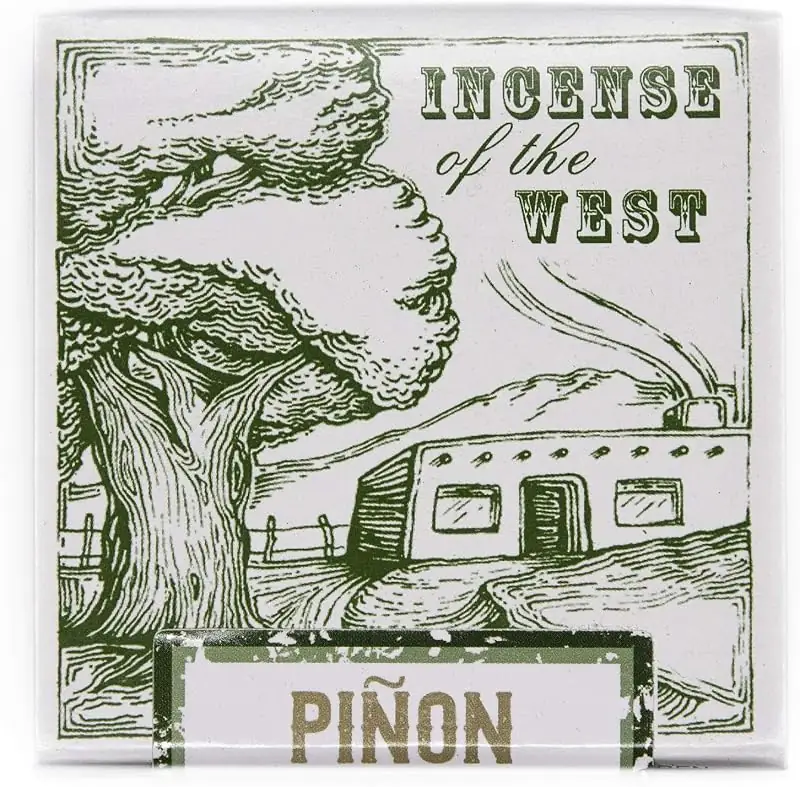
Best for: Wood-smoke atmosphere with no rolled paste involved.
- Bricks, Not Sticks: These are natural wood incense bricks, 40 count, the piñon pine sliced and dried rather than pasted onto a skewer, a different combustion entirely.
- Scent as Place: The listing sells winter in Northern New Mexico, fires burning in each home, smoke drifting lazily out the chimneys while the snow glistens, a postcard printed as a product description.
- Hearth Comparison, Quoted: The aroma is described as the smell of a campfire or hearth fire, best as a smoother, distinctive fragrance unlike other pines.
- Healthier-by-Material Argument: Made with the all-natural wood of the Piñon tree, burning this natural wood provides a healthier environment as opposed to incense made with synthetic chemicals, the brand’s comparison, printed as written.
- No Holder, Said Up Front: The title itself reads Without Holder, and the usage line names relaxation, meditation, yoga and prayer as the room to fill.
Pros:
- Forty solid-wood bricks with zero bamboo core or binder to burn
- Made in the USA by a New Mexico manufacturer, the origin is the brand
- Smells like a fireplace, which no masala box attempts
Cons:
- Aromatic smoke volume runs high, open the door
- No burn minutes published per brick anywhere on the page
- Without holder means sourcing a fire-safe dish separately
Keep the Piñon Bricks on Amazon
9. Gonesh Classic No. 8 Perfumes of Spring Mist, 20 Sticks
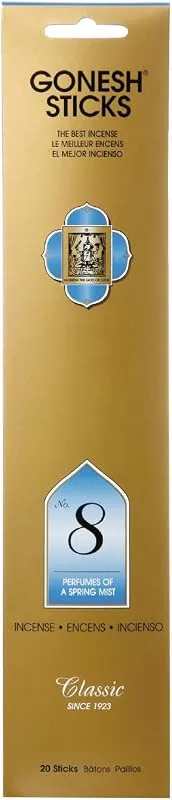
Best for: The smallest possible first date with fragrance incense.
- Twenty Gold Sticks: 20 incense sticks in pack, in the slim gold carton numbered 8 for Spring Mist, one of the classic fragrance lines that circulates quietly online.
- Note Structure, Published: Composed primarily of a blend of mellow top notes floating lightly over the much sharper bottom notes, an actual pyramid description on the page.
- Invigorating, Not Sleepy: The brand sells a cool blend of gentle fragrances to create an invigorating aromatic experience, morning-scent energy rather than bedtime weight.
- The Perfumer Line: The description explains that Gonesh by Genieco continually strives to elevate the level of fragrance delivery by working with creative and skilled perfumers, the house’s own pitch.
- Named by Number: In the No. 8 slot of a numbered range, the page invites the sampler instinct without forcing a twelve-box purchase.
Pros:
- Lowest-stakes trial of any listing here
- Sharp-over-mellow note structure is unusual, in a good way
- The numbering system makes repeat orders unambiguous
Cons:
- Twenty sticks is a week or two at one stick a day
- No burn minutes or stick dimensions on the page
- Perfume-forward incense divides rooms more than sandalwood does
Start With the Gonesh Gold on Amazon
Frequently Asked Questions
Q1: How many sticks come in a 250g box of incense?
A: The two 250-gram listings here, Satya and Goloka, publish the weight and not the count, which is honest, because hand-rolled masala sticks vary in thickness and breakage pack to pack. The nearest published number comes from Raajsee, which estimates about 150 sticks across twelve 15-gram packs. A useful planning figure is that a big box runs long enough to outlast a subscription refill cycle, so judge by weeks between lights, not by counting.
Q2: What is the difference between Japanese and Indian incense for a practice space?
A: Construction, then mood. Indian agarbatti rolls masala paste onto bamboo and burns 35 to 45 minutes with sweet projection, the Goloka and Raajsee pages quote 45. Japanese styles, Shoyeido, Nippon Kodo and Morning Star here, skip the core, burn around 25 to 30 minutes and read subtler, which suits apartments and shared studios where heavy smoke is a negotiation.
Q3: Which of the best incense for yoga and meditation needs the least setup?
A: Two ship ready. Nippon Kodo’s tin contains 40 sticks and an incense holder, and Morning Star’s description says the box comes with 200 sandalwood sticks and one incense holder, so both light the day they arrive. Santa Fe states the opposite in its title, bricks without holder, and the rest of the shelf expects a dish, tray or fire-safe shell you supply.
Q4: Should the scent choice be decided before class starts?
A: For a studio with mixed practitioners, yes, mildly. The pages here split three ways, champa sweetness at Satya, Goloka and most of Raajsee’s twelve, plain sandalwood at Nippon Kodo and Morning Star, and wood smoke at Santa Fe’s piñon. Sandalwood and Moss Garden are the safe shared-room bets, while champa and piñon want a committed household or an open door.
Q5: Do any of these brands say something about sustainability?
A: Three pages do. Raajsee describes hand-rolled production in India using fair trade labor and environmentally responsible production methods; Goloka prints that all proceeds from the product’s distribution go to charitable activities; and Shoyeido sells its Kyoto pedigree of 300 year old family-owned recipes. Those are the brands’ own lines, quoted as written rather than expanded.
Final Verdict
Nine listings, two construction schools and one spectrum of room impact. The Indian masala boxes, Satya, HEM, Goloka and Raajsee, sell long 35 to 45 minute burns, sweet projection and weight-measured quantity, while the Japanese coreless houses, Shoyeido, Nippon Kodo and Morning Star, trade minutes for subtlety and ship the smaller rooms their way. Santa Fe’s piñon bricks and Gonesh’s tiny gold No. 8 sit outside both traditions entirely, one as pure wood smoke, one as a twenty-stick invitation.
If you want the best incense for yoga and meditation that makes a rented room behave like a studio for an hour at a time, don’t overthink it—these are already:
✔ Grams, counts and burn minutes quoted from each listing
✔ Holder inclusions and origin lines stated exactly as published
✔ Sticks, bricks and kits sorted by how much they ask of the room
Best Overall Pick – Satya Sai Baba Nag Champa Agarbatti, 250g Box
Best Budget – HEM Meditation Incense Sticks, 6-Pack of 20
Best Craft – Shoyeido Moss Garden Nokiba Incense, 250 Sticks
Best Kit – Nippon Kodo Kayuragi Sandalwood Incense, 40 Sticks with Holder