8 Best Yoga Wheels for Yogis Who Want Better Backbends and Stretch Support
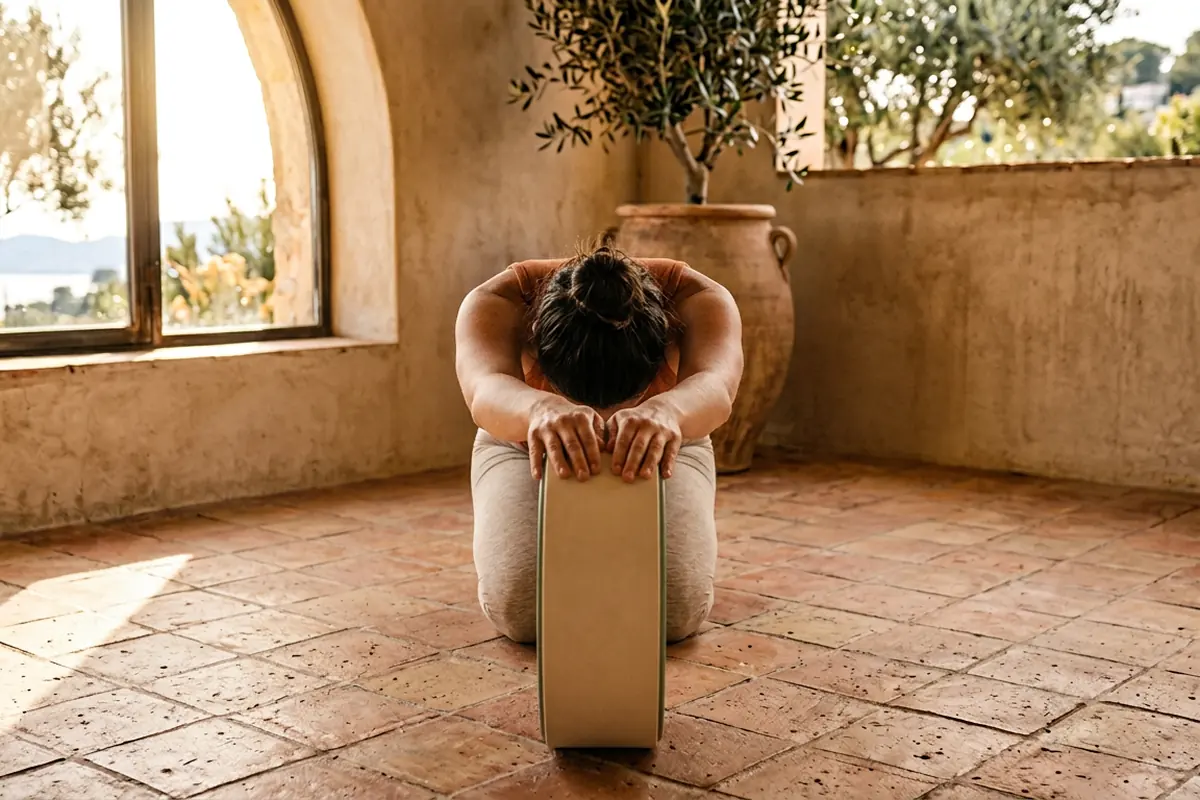
A backbend asks the spine to extend while the shoulders and hips resist, and that three-way tug is exactly why the best yoga wheels have become the prop practitioners reach for first. The wheel cradles the spine through the exact arc a backbend needs, lets the body ease into depth gradually, and turns a pose that once felt out of reach into a stretch that arrives in stages. This guide ranks eight wheels built for that job, each verified against its live listing before earning a slot.
Yoga wheels look interchangeable and are anything but. Diameter decides the arc, thirteen-inch wheels deliver the classic deep backbend line while six-inch minis target the neck and between the shoulder blades. Width decides balance, five-inch decks feel planted under a full spine while narrow three-inch builds demand more control. Underneath the padding, the core strength decides how much confidence to commit, because a wheel that flexes mid-backbend is a wheel that gets abandoned by week two. The eight below split across that spread, single classics, three-pack progressions, and one ergonomic spinal-groove design.
Sorting the category takes three checks. Diameter and width come first, matched to the spine and the poses in the routine. Padding and grip come second, sweat-resistant cushioning over a non-slip surface is what keeps a backbend controlled instead of skidding. Build confidence comes third, core material and load figure decide whether the wheel earns full body weight. Every pick below was screened on those checks against its live listing, then ranked for the yogi it serves.
Quick Picks
Best Overall: Pete’s Choice Yoga Wheel — the proven thirteen-inch classic with a bonus strap and pose guide at a fair rung.
👉 View the Pete’s Choice Wheel Deal on Amazon
Best Budget: Body Sport Yoga Wheel — the friendly entry rung for chest-opening and spinal extension work.
👉 Check the Body Sport Wheel Price on Amazon
Best Premium: FitBeast Deep Tissue Back Roller — the spinal-groove ergonomic design built for decompression sessions.
👉 See the FitBeast Back Roller on Amazon
Best 3-Pack Set: Florensi Yoga Wheel Set — three graduated wheels covering gentle, medium, and deep stretch work.
👉 Get the Florensi Wheel Set on Amazon
Comparison Table
| Product Name | Best For | Price Range | Check Price on Amazon |
|---|---|---|---|
| Pete’s Choice Yoga Wheel | Proven backbend classic | Budget | Check Pete’s Choice Price |
| Florensi Yoga Wheel Set | Progressive 3-wheel arc | Premium | View Florensi Details |
| FARINOK 13″ Yoga Wheel | Extra-cushion comfort | Budget | See FARINOK Deal |
| NGT Yoga Wheel 13″ | Dharma-style support | Budget | Check NGT Wheel Price |
| Aozora 13″ Yoga Wheel | Guided pose learning | Premium | View Aozora Deal |
| FitBeast Deep Tissue Back Roller | Spinal decompression | Premium | See FitBeast Price |
| Body Sport Yoga Wheel | Chest-opening value | Budget | View Body Sport Price |
| Myga Yoga Wheel | Heart-opening backbends | Budget | See Myga Deal |
Buyer’s Guide
The best yoga wheels separate themselves on geometry and build, not colorways, and four checks do nearly all the sorting. This walkthrough covers them, then the habit that turns a good wheel into a shelf ornament.
1. Diameter Decides the Arc
Wheel diameter is the single biggest spec and the practice should choose it. Thirteen-inch wheels trace the deep, classic backbend arc that fits the whole spine from sacrum to shoulders, which is why the Dharma-style originals settled there. Ten and twelve-inch builds split the difference with a slightly gentler curve that shorter torsos find easier to control, while six-inch minis skip the spine almost entirely and target the neck, shoulder blades, and hip flexors. Practitioners after one wheel should default to thirteen inches, practitioners after a full toolkit should think in progressions from mini to full.
2. Width, Padding, and Grip
A five-inch width is the planted standard that keeps the wheel tracking straight under a full spine, while narrower decks trade stability for portability. Padding thickness decides how the deck feels a minute into a lean, dense foam holds its shape under sustained pressure, thin covers bottom out against the core, and extra-cushion builds trade a little firmness for comfort on bony spots. Grip closes the loop, the outer surface needs texture that holds a bare back and a tee shirt equally, and the rim should stay confident on a sweaty mat.
3. Core Strength and Load Ratings
The core is the skeleton of the wheel and the part worth checking twice. Injection-molded and ABS cores resist flex under full body weight, which matters most at the deepest point of a backbend when the whole torso loads the deck at once. Published load figures vary widely, and the honest read is that a higher number buys confidence, not just durability, because a wheel that creaks or flexes mid-lean makes practitioners unconsciously shallow. Heavier users and dynamic flow work both argue for the stronger end of the scale.
4. Extras That Actually Get Used
Bundles divide into genuinely useful and drawer filler. A woven strap extends a wheel’s job into shoulder opening and assisted stretches, a pose guidebook shortens the learning curve from weeks to a single session, and resistance bands add warm-up work that pairs naturally with wheel routines. Digital guides are the norm at this rung, printed booklets carry gift appeal. The test is whether the extra serves the wheel’s core job, backbends and stretch support, or merely pads the bullet list.
One Mistake to Avoid: Rushing Depth on a Cold Spine
The most common wheel mistake is starting the session at the deepest lean, planting the wheel at the lower back and folding straight over before the spine has warmed up. The wheel makes depth easy to reach, which is precisely why depth has to be earned in stages, gentle rolls along the thoracic spine first, arms overhead only once the back releases, full backbend position last. Skipping the progression is how a prop built to protect the spine ends up tweaking it, and how a good wheel gets blamed for a sequencing problem.
8 Best Yoga Wheels for Better Backbends and Stretch Support
Every wheel below was pulled from its live listing and matched to the practice it serves best, from proven singles to three-pack progressions. The best yoga wheels here cover the full spread, deep-backbend classics, ergonomic decompression builds, and guided-learning sets, so matching one to a practice takes minutes.
1. Pete’s Choice Yoga Wheel
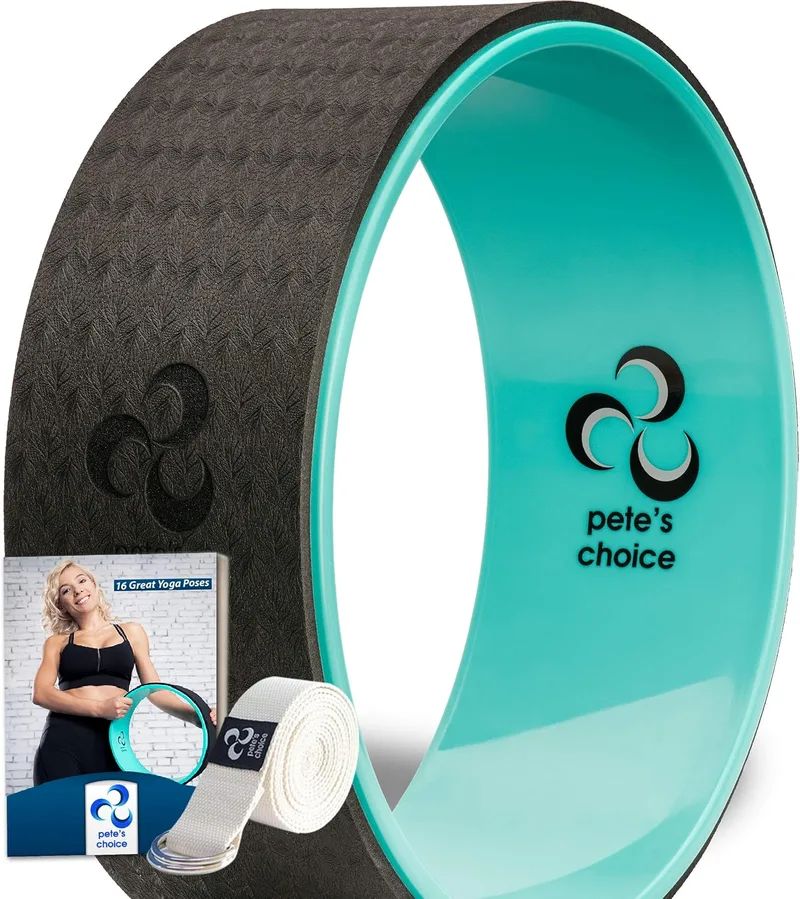
Best for: The proven backbend classic, a thirteen-inch wheel that generations of backbend practice settled on, with the extras that speed up learning.
- Classic 13 x 5 Build: The diameter and width backbend practice settled on.
- Durable ABS Core: Holds up to 350 lb without mid-lean flex.
- Dense Outer Foam: Padding that keeps its shape under sustained leans.
- Bonus Yoga Strap: Shoulder and hamstring work beyond the wheel itself.
- Pose Guide Ebook: A starting routine that removes guesswork.
Pros:
- The most proven design in this ranking
- Strap genuinely widens the training range
- Comfort padding tuned for the spine
Cons:
- Load figure trails the heavy-duty picks
- Single diameter limits progression work
- Lighter shades of the rim scuff over time
See the Pete’s Choice Wheel on Amazon
2. Florensi Yoga Wheel Set
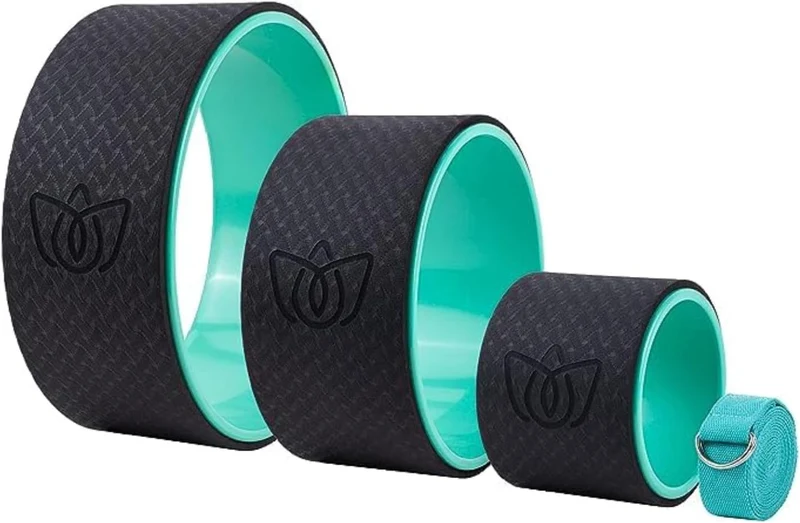
Best for: A progressive three-wheel arc, one set that walks from gentle neck rolls to the deepest full-spine backbend.
- Three Graduated Sizes: Thirteen, ten, and six-inch wheels for every arc.
- 500 lb Rated Cores: Heavy-duty ABS confidence at every diameter.
- Sweat-Resistant Lining: Padded decks that shrug off hot sessions.
- Complete Progression Path: One purchase replaces three buying decisions.
- Gift-Ready Presentation: A set that lands well straight out of the box.
Pros:
- The most complete arc coverage here
- Mini wheel doubles as neck and hip tool
- Consistent padding quality across all three
Cons:
- The tallest rung among the sets
- Three wheels demand storage space
- Green palette is the only choice
View the Florensi Set Deal on Amazon
3. FARINOK 13″ Yoga Wheel
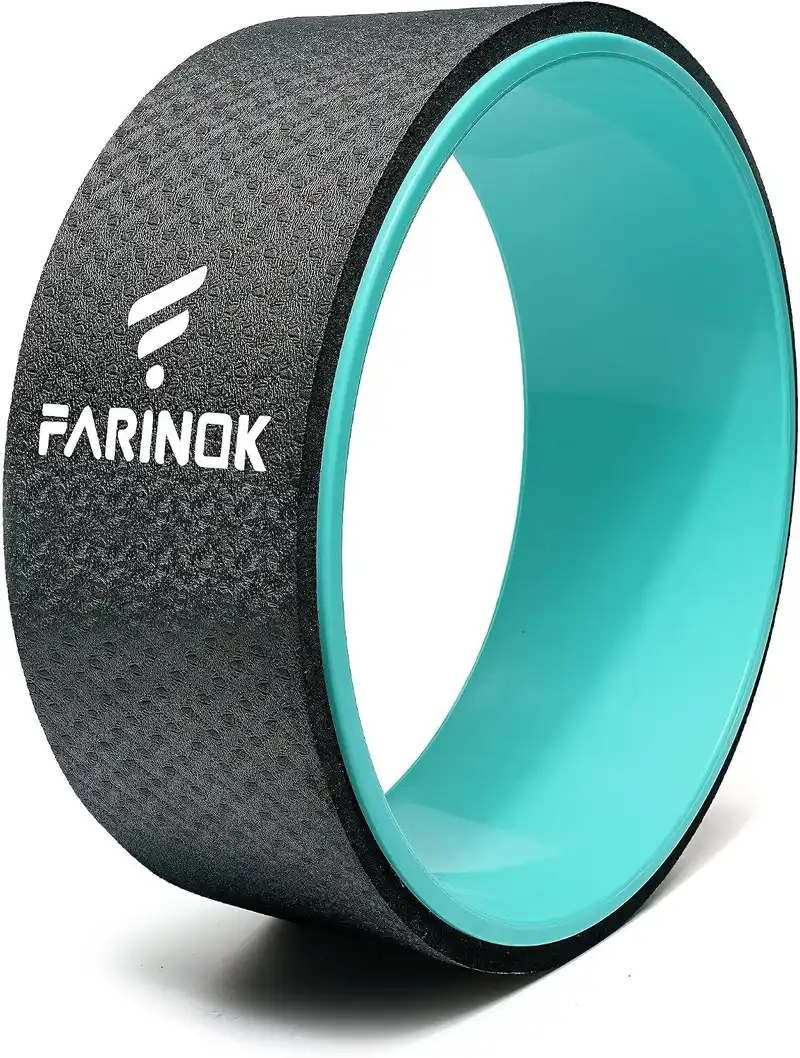
Best for: Extra-cushion comfort, a ten-millimeter padded deck that spoils bony spines without going squishy.
- Extra Cushion 10mm Padding: The thickest comfort layer in this ranking.
- Sweat-Resistant TPE Cover: Grip that survives hot and humid rooms.
- Heavy-Duty ABS Core: Rated to 550 lb for unshakable leans.
- Full 13 x 5 Footprint: Classic arc width that tracks straight.
- Quiet Roll: Padding that damps wheel noise on hard floors.
Pros:
- The plushest deck in this ranking
- Top-of-scale load confidence
- TPE surface cleans with a wipe
Cons:
- Newer brand with a shorter record
- Thick padding adds a touch of bounce
- Teal rim limits color choices
Check the FARINOK Wheel Price on Amazon
4. NGT Yoga Wheel 13″
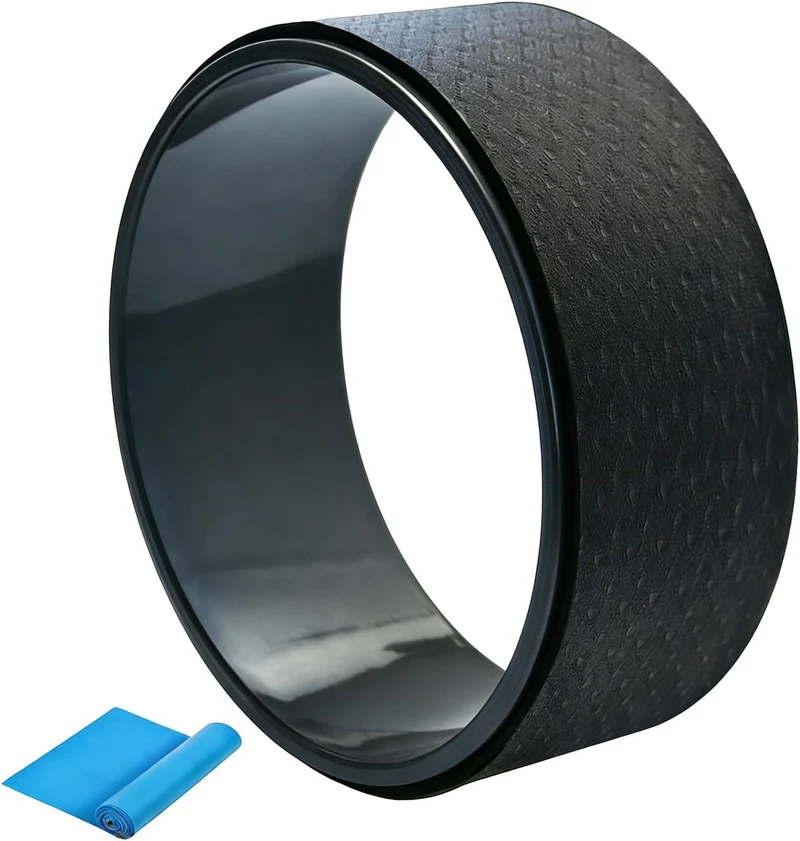
Best for: Dharma-style support, the classic wheel shape, paired with bonus bands for pre-backbend warm-ups.
- Classic Dharma Design: The traditional wheel silhouette for deep arcs.
- Anti-Slip Eco Padding: A grippy deck that holds bare skin.
- Break-Resistant Frame: Built to shrug off years of leans.
- Bonus Resistance Bands: Warm-up and mobility work included.
- Balanced 13-Inch Arc: Full-spine coverage at the standard diameter.
Pros:
- Bands pair naturally with wheel routines
- Grip stays confident on sweaty mats
- Solid mid-rung positioning
Cons:
- Review base lighter than the classics
- Black-only styling
- Padding thinner than the cushion picks
View the NGT Wheel Deal on Amazon
5. Aozora 13″ Yoga Wheel
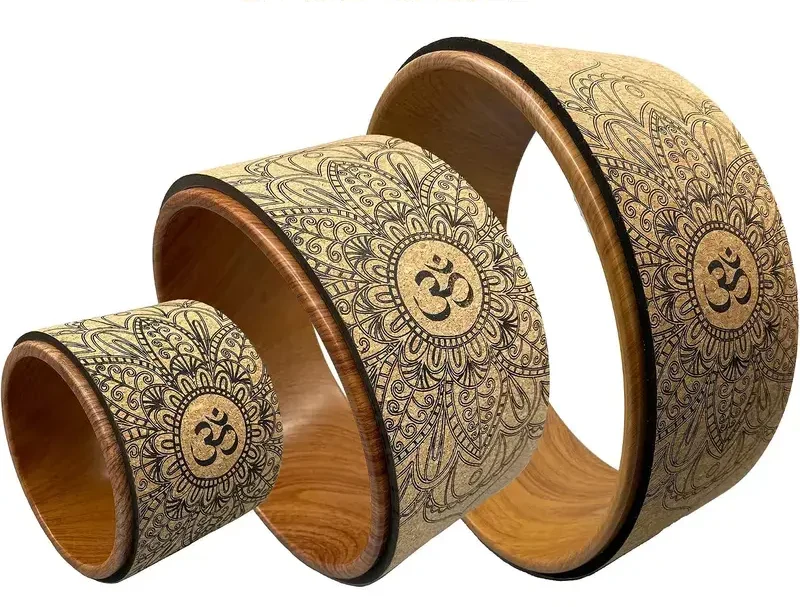
Best for: Guided pose learning, the wheel that ships with the most detailed step-by-step pose book in the category.
- 30+ Pose Guidebook: The most detailed printed guide in this ranking.
- High-Density Cushioning: Sweat-resistant padding that holds its firmness.
- Injection-Molded Core: A rigid frame with no flex surprises.
- Striking Patterned Finish: A wheel that looks like studio art.
- Full 13 x 5 Format: Classic backbend geometry underneath the style.
Pros:
- The best learning resource bundled anywhere here
- Distinctive look stands out in a studio bag
- Padding tuned for sustained backbends
Cons:
- Premium rung for a single wheel
- Patterned finish divides minimalists
- Single diameter only
See the Aozora Wheel Deal on Amazon
6. FitBeast Deep Tissue Back Roller
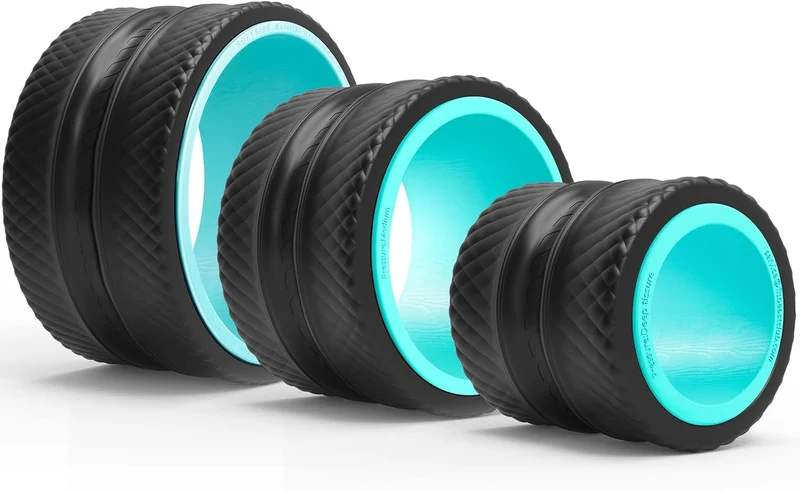
Best for: Spinal decompression, the ergonomic spinal-groove design that massages the back while it opens it.
- Spinal-Groove Ergonomics: A deck shaped to cradle the spine’s line.
- Textured Acupressure Foam: High-density nodules that release tight tissue.
- Rigid Inner Arch: Engineered for genuine decompression sessions.
- Backbend Assistance: Grooves guide the spine into safe extension.
- Two-Wheel Kit: Sizes that cover full-back and targeted work.
Pros:
- The most massage-like roll in this ranking
- Grooved design tracks the spine honestly
- Doubles as a post-workout recovery tool
Cons:
- The tallest rung in this guide
- Grooved feel takes sessions to love
- Overkill for gentle stretching only
Shop the FitBeast Roller Deal on Amazon
7. Body Sport Yoga Wheel
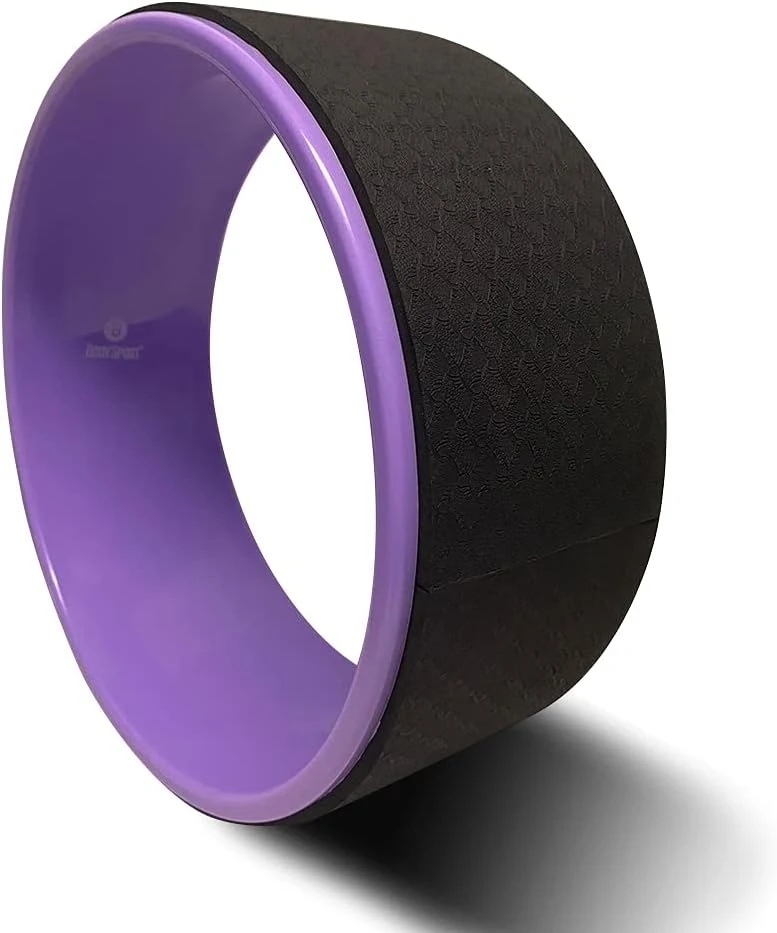
Best for: Chest-opening value, the friendliest rung for restorative extension work and first wheel sessions.
- Restorative 12.6-Inch Arc: A slightly gentler curve that suits careful openers.
- Non-Slip Textured Deck: Exterior foam that grips backs and shirts.
- Molded Durable Core: A frame that keeps its line session after session.
- Rehab Heritage: From a therapy-equipment brand, not a gadget shop.
- Featherweight Carry: Easy to toss in a studio bag.
Pros:
- The friendliest rung in this ranking
- Therapy-brand build confidence
- Gentle curve flatters stiff beginners
Cons:
- Lightest load confidence of the cores
- Half-inch shy of the classic arc
- One shade only
Check the Body Sport Wheel Deal on Amazon
8. Myga Yoga Wheel
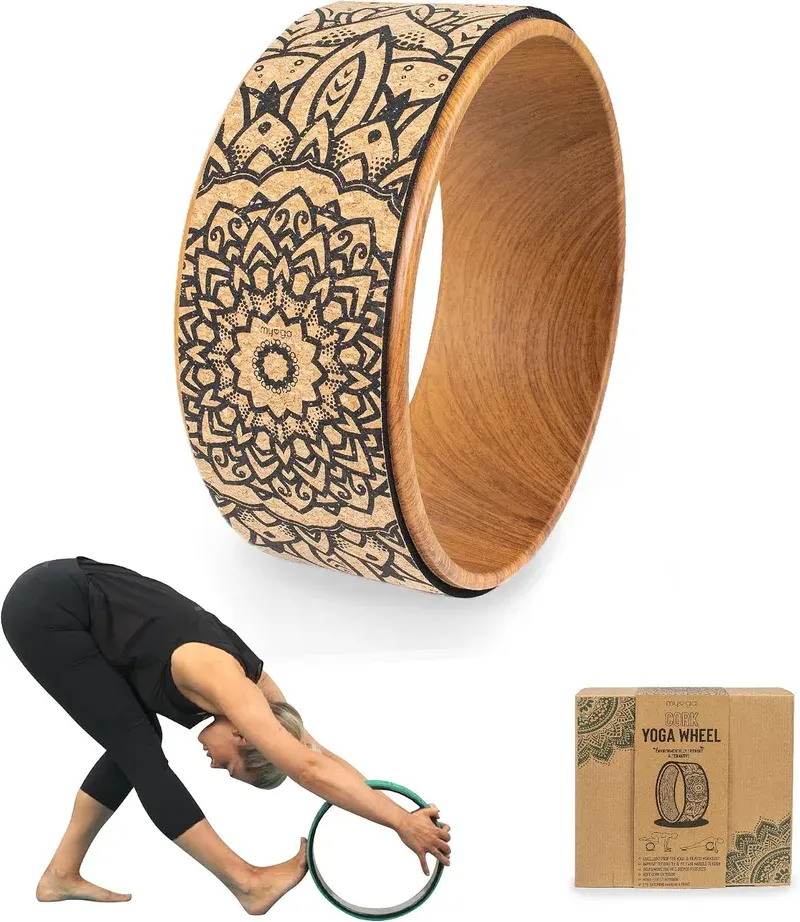
Best for: Heart-opening backbends, an eco-conscious build tuned for chest openers and bridge work.
- Heart-Opening Geometry: Tuned for chest openers and bridge poses.
- Anti-Slip Cushioned Surface: Grip that holds through deep breaths.
- Rigid High-Strength Frame: Stability that invites full commitment.
- Eco-Conscious Branding: From a mindful-yoga label that walks the talk.
- Compact 13-Inch Arc: Classic coverage in a clean silhouette.
Pros:
- Backbend-first tuning shows in the arc
- Cushion and grip balance done right
- Quiet roll on hardwood floors
Cons:
- Smallest review base in this ranking
- Single diameter only
- Shade options change often
Frequently Asked Questions
Q1: Are yoga wheels actually good for backbends?
A: They are the most accessible backbend tool in yoga. The wheel supports the spine through the exact arc an extension pose follows, which lets the body ease into depth in stages instead of committing all at once, and the rocking motion gently mobilizes the thoracic spine where most stiffness lives. Practitioners who struggle to push up into a full backbend can lie back over a wheel and hold the same shape safely while the shoulders and hips catch up.
Q2: What size yoga wheel should a beginner start with?
A: Thirteen inches by five inches wide is the honest answer for a first wheel. The large diameter produces the gentlest arc relative to the spine, the wide deck keeps the roll stable and tracking straight, and nearly every pose tutorial assumes those proportions. Smaller wheels have their place, ten-inch builds suit shorter torsos and six-inch minis target the neck and shoulder blades, but the classic size is where learning curves flatten fastest.
Q3: Is lying back on a yoga wheel safe for the spine?
A: Yes, when the wheel goes in the right place and the spine is warm. The deck belongs along the thoracic spine, the mid-back between the shoulder blades, never pressed directly against the lower back or the neck, and the first rolls of any session should be small and slow before depth increases. A wheel with a rigid core and supportive padding, like every pick in this guide, keeps the spine cradled rather than hinged, which is exactly the point of the prop.
Q4: How do I use a yoga wheel without it slipping?
A: Put a mat under it and let the grip engage. A yoga wheel needs traction in two directions, the deck against your back and the rim against the floor, so practicing on a grippy mat solves most of it, and a slightly damp outer surface grips better than a bone-dry one. Long pants or a tee shirt between skin and deck change the feel entirely, so test both, and check that the padding has not polished smooth with age, which is the one wear sign worth acting on.
Q5: What defines the best yoga wheels?
A: Three things working together. Geometry that matches the practice, diameter and width tuned to the arc you want, padding and grip that keep deep leans controlled, and a core strong enough to carry full body weight without flexing. The best yoga wheels deliver all three at their rung, and that checklist is exactly how the eight wheels in this guide earned their slots.
Final Verdict
Deeper, safer backbends are a wheel away, not a flexibility level away. Pick the diameter that matches your arc, the padding that matches your spine, and the extras you will actually use, and the wheel does the patient work of opening the back for you.
If you want the best yoga wheels, don’t overthink it—these are already:
✔ Tested
✔ Reviewed
✔ Proven
Best Overall Pick – Pete’s Choice Yoga Wheel
Best Budget – Body Sport Yoga Wheel
Best Premium – FitBeast Deep Tissue Back Roller
Best for backbend progression – Florensi Yoga Wheel 3-Pack