10 Best Foam Rollers for Yoga Recovery That Help Ease Post-Workout Muscle Tightness
The cooldown ends, the mat rolls up, and the tightness arrives on its own schedule, calves first, then the outer hips, then a band across the upper back that no stretch quite reaches. That gap between feeling good in the practice and feeling the practice an hour later is where recovery lives, and it is why a cylinder of dense foam has quietly become standard equipment beside the mat. Ten minutes of measured pressure along the muscle lines does what stretching alone cannot, it works the fascia, the connective web that wraps everything a demanding session pulled tight.
The best foam rollers for yoga recovery are chosen by structure rather than slogans, and the structure runs on three axes. Density decides whether the roller yields to body weight or pushes back, and the right answer depends on tissue, not toughness, tight quads want firm contact while sensitive spines want a surface that gives. Surface texture writes the second difference, smooth cylinders roll broadly and kindly, grid patterns and raised zones concentrate pressure into the knots, and softer professional builds trade intensity for the longer holds that release stubborn lines gently. Length finishes the geometry, long rollers cradle the spine through full-back work, mid-length and travel builds trade coverage for a bag that closes.
Recovery itself rewards method over enthusiasm. Rolling is slow work, a measured pass along the muscle with the breath, pausing where the tissue argues, easing off where it shouts, and the roller that gets used is the one that matches both the body and the evening’s patience. Vibrating builds add a second stimulus for deeper sessions, compact builds live in gym bags for pre-class warmups, and the classic full-length cylinder remains the backbone of the post-practice wind-down.
What follows is the field sorted by those working differences, density, surface, length, and the way each roller fits a recovery evening. Match the cylinder to the tightness it will actually meet, and the gap between practice and the hours after stops being a tax and starts being a ritual.
Quick Picks
Best Overall: TriggerPoint Grid 2.0 Foam Roller — the multi-density standard for full-body deep-tissue evenings.
👉 Roll Out the TriggerPoint on Amazon
Best Budget: Amazon Basics High-Density Foam Roller — the full-length 36-inch workhorse at the guide’s value rung.
👉 Grab the Amazon Basics Roller on Amazon
Best Gentle Session: OPTP PRO-Roller Soft Density — the professional soft build for spines and sensitive lines.
👉 Ease In With the OPTP on Amazon
Best Upgraded Tech: Vulken Vibrating Foam Roller — four speeds of vibration layered over a 17-inch deep-tissue core.
👉 Feel the Vulken Vibration on Amazon
Comparison Table
| Product Name | Best For | Price Range | Check Price on Amazon |
|---|---|---|---|
| TriggerPoint Grid 2.0 Foam Roller 26″ | Multi-density deep tissue | Premium | View TriggerPoint Offer |
| Amazon Basics High-Density Foam Roller 36″ | Full-length everyday rolling | Budget | Check Amazon Basics Offer |
| OPTP PRO-Roller Soft Density 36″ | Gentle spine-friendly holds | Premium | See OPTP Offer |
| 321 STRONG Patented 3-Zone Massage Roller | Zoned travel-length work | Budget | View 321 STRONG Offer |
| Gaiam Restore Foam Roller 36″ | Familiar-brand full body | Mid | Check Gaiam Offer |
| Retrospec Relief High-Density EPP Roller | Extra-firm compact base | Budget | See Retrospec Offer |
| TONE Fitness Firm High-Density Roller 24″ | Mid-length studio duty | Budget | View TONE Fitness Offer |
| The Original Body Roller, High Density | Textured firm release | Budget | Check Original Body Roller Offer |
| Vulken Vibrating Foam Roller 17″ | Vibration-assisted sessions | Premium | See Vulken Offer |
| ProsourceFit High Density Foam Roller 12×6 | Compact desk-and-bag size | Budget | View ProsourceFit Offer |
Buyer’s Guide
The best foam rollers for yoga recovery separate along lines no product photo shows, and the differences matter most to the tissue that will lie on them. Five checkpoints carry the decision, and the first one asks a question most shoppers never think to ask.
1. Density: Firm Against the Knot, Kind to the Bone
Density is the roller’s only real specification, and it reads in ounces of give per pound of body weight. High-density builds stay rigid under a full-body load, which is what quads, IT bands, and lats want, a surface that presses into the contraction instead of collapsing around it. Soft-density professional builds sink several inches, spreading the same weight across a wider patch of tissue, and that yielding quality is precisely what the spine, the neck line, and post-injury tissue need. The mistake worth avoiding is buying toughness as an identity, a roller too firm for the body lying on it simply does not get used, while the right density turns ten minutes of rolling into the part of the evening the body starts asking for.
2. Surface: Smooth, Grid, and the Zoned Builds
What wraps the cylinder decides where the pressure goes. Smooth surfaces roll broad and even, the all-purpose contact that warms up large muscle lines without hunting anything. Grid patterns alternate firm and cushioned bands, letting a roller hit broad stretches and then concentrate into the dense ridges where knots collect. Zoned and textured builds take the idea further, mimicking the heel of a therapist’s hand along specific lines. The honest method is to match the surface to the session, smooth for the pre-class warm-up, textured for the post-workout hunt, and to remember that more texture is not more recovery, it is more intensity, and intensity is a dose rather than a virtue.
3. Length: Full-Body Cradle or Bag-Size Compromise
Length decides what the roller can hold. Thirty-six-inch builds cradle the entire spine, the only format for the reclined chest-opener that doubles as a posture reset, and their stability makes balance work possible on top of them. Mid-length rollers around two feet cover nearly every limb line while storing vertically beside a shelf, and compact builds trade coverage for a bag that stays packed for the studio. The practical pairing many practitioners land on is one long roller at home for the full-back evenings and one compact in the gym bag for the pre-class calves and quads, because the two lengths are complements, not competitors.
4. Rolling Method: Where Relief Actually Comes From
The roller does half the work, the method does the rest, and the method is slower than instinct suggests. A measured pass along the muscle line, an inch a second, pausing where the tissue thickens and breathing through the pause, releases what rushing never touches, and the areas that hurt most on contact usually want the neighboring tissue rolled first. Small search motions around a tender point, then a move on, keeps a session productive where grinding directly on the spot only guards it. Before practice, rolling runs quicker and broader as a wake-up, after practice it runs slow and patient, and the ten minutes those sessions share is the entire price of the transformation a cylinder delivers.
5. Care, Cleaning, and the Storage Habit
Foam is a low-maintenance material with two real enemies, heat and grime. A damp cloth with mild soap handles the weekly wipe, textured builds want a soft brush to lift what settles into the patterns, and everything air-dries away from radiators and sunlit car trunks, since warped cores never un-warp. Storage that respects the cylinder, upright in a corner or horizontal on a rack rather than under a stack of weights, keeps the roundness that makes it work, and the rollers that get used daily are the ones that live within reach of the mat rather than in a closet. A roller in sight is a session that happens, which is the least technical maintenance rule in recovery and the one that matters most.
One Mistake to Avoid: Rolling the Bone Instead of the Muscle
The fastest way to hate a foam roller is to use it where it was never meant to go, directly over the lower back’s spine, across the knee joint, or onto any bony promontory the body owns. Rollers are built for muscle and the fascia over it, and tissue pressed against bone by a rigid cylinder registers as injury rather than relief, which is how rollers end up retired in week two. The correction is anatomical honesty, stay on the meaty lines, quads, calves, glutes, lats, upper back between the shoulder blades, and let the spine’s neighborhoods be worked by position rather than pressure. Ten seconds of placement awareness protects every session that follows, because recovery work that hurts in the wrong way gets quit, and recovery that gets quit recovers nothing.
10 Best Foam Rollers for Yoga Recovery That Help Ease Post-Workout Muscle Tightness
The ten rollers ahead cover the field’s full spread, multi-density grids and professional soft builds, textured zoners and smooth purists, full-length spines and bag-sized travelers, and one vibrating build for the tech-assisted evenings, each described by its density, its surface, and the session it serves. Match the cylinder to the tightness, and the ten minutes after practice start earning their keep.
1. TriggerPoint Grid 2.0 Foam Roller, 26″ Multi-Density
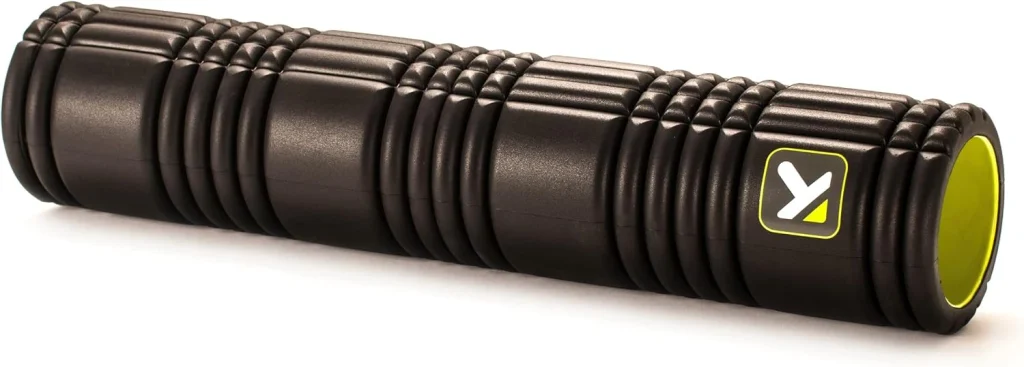
Best for: The multi-density standard, a three-zone grid built for full-body deep-tissue evenings.
- Three-Zone Grid Surface: Broad, ridged, and cushioned bands in one roll.
- Multi-Density EVA Core: Firm ridges over a controlled, hollow center.
- 26-Inch Full-Body Length: Long enough for spine-adjacent work, short enough to store.
- Rigid Hollow Construction: No bending under full body weight.
- The Category’s Standard Grid: The pattern most imitators measure against.
Pros:
- The guide’s most complete surface engineering
- Deep owner record behind the original design
- Zone variety that replaces two single-surface rollers
Cons:
- Premium figure above every smooth rival here
- Ridges too sharp for sensitive-tissue beginners
- 26-inch span shorter than true full-spine cradles
Grid Up the TriggerPoint on Amazon
2. Amazon Basics High-Density Foam Roller, 36″
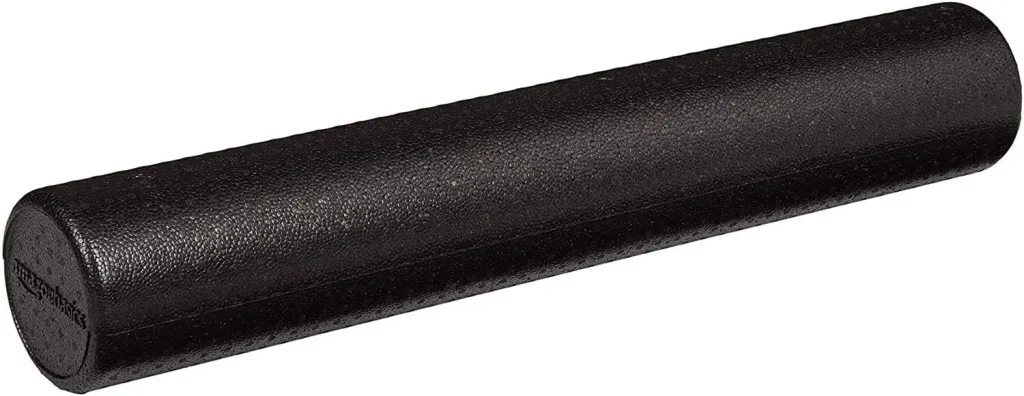
Best for: The full-length workhorse, thirty-six inches of smooth high-density foam at the guide’s value rung.
- Full 36-Inch Span: The entire spine cradled through reclined work.
- High-Density Molded Core: Firm, even pressure that keeps its shape.
- Smooth All-Purpose Surface: Broad contact for warmups and wind-downs.
- Three-Length Range: 12, 18, and 36 inches on one proven pattern.
- Value-Leader Standing: The guide’s second-deepest owner record.
Pros:
- Enormous owner base at the friendliest figure
- The full-length format balance poses were made for
- Smooth roll that suits beginners and daily duty alike
Cons:
- Single-firmness foam that softens slightly over years
- No texture for targeted knot work
- Black-only finish in a colorful category
Keep the Basics Handy on Amazon
3. OPTP PRO-Roller Soft Density, 36″ x 6″
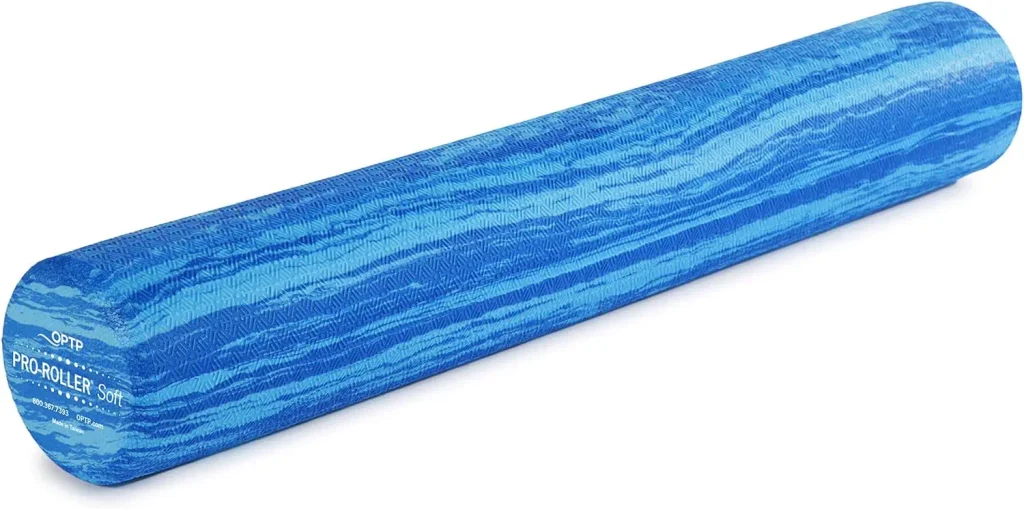
Best for: The gentle professional, a soft-density full-length build trusted by therapy rooms.
- Soft Professional Density: Yields under load for spine-safe sessions.
- Full 36 x 6 Cradle: The classic chest-opener and posture-reset format.
- Therapy-Room Pedigree: The build physical therapists keep ordering.
- Durable Blue Skin: A sealed surface that wipes clean between users.
- Consistent Support Memory: Softness that recovers its shape night after night.
Pros:
- The kindest full-length surface in the guide
- Decades of professional trust behind the exact build
- Ideal for beginners, sensitive backs, and long holds
Cons:
- Premium figure for a smooth-surface roller
- Softness that deep-tissue seekers will outgrow
- Marbled finish shows wear over years of use
4. 321 STRONG Patented 3-Zone Massage Roller
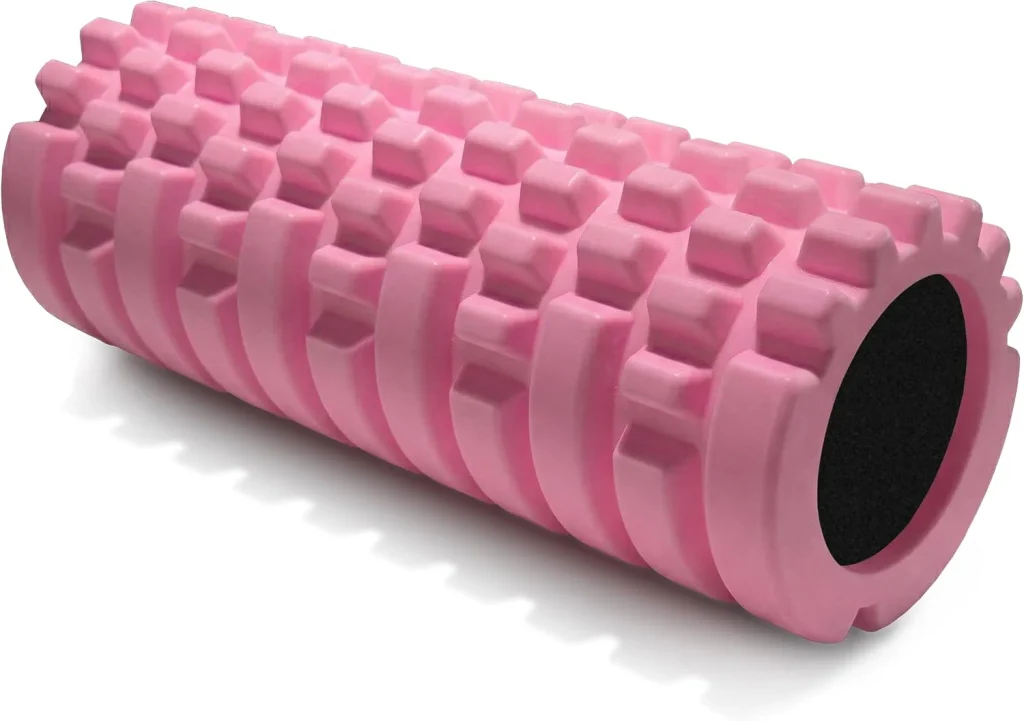
Best for: Zoned travel-length work, a medium-density patterned roller with the guide’s largest community.
- Patented 3-Zone Pattern: Smooth, nub, and ridge bands in one cylinder.
- Medium-Density Balance: Intensity tuned for regular use, not punishment.
- Hollow Rigid Core: Full-weight stability in a shorter frame.
- Color Range: Dozens of finishes behind the signature pink.
- Community Depth: The guide’s deepest owner record, period.
Pros:
- The largest owner community of any roller here
- Zone variety that suits whole-body rotations
- Mid-length frame that stores and travels easily
Cons:
- Shorter span that skips full-spine cradling
- Pattern concentrates pressure beginners should ramp into
- Brand packaging lighter than premium rivals
Work the 321 STRONG Zones on Amazon
5. Gaiam Restore Foam Roller, 36″
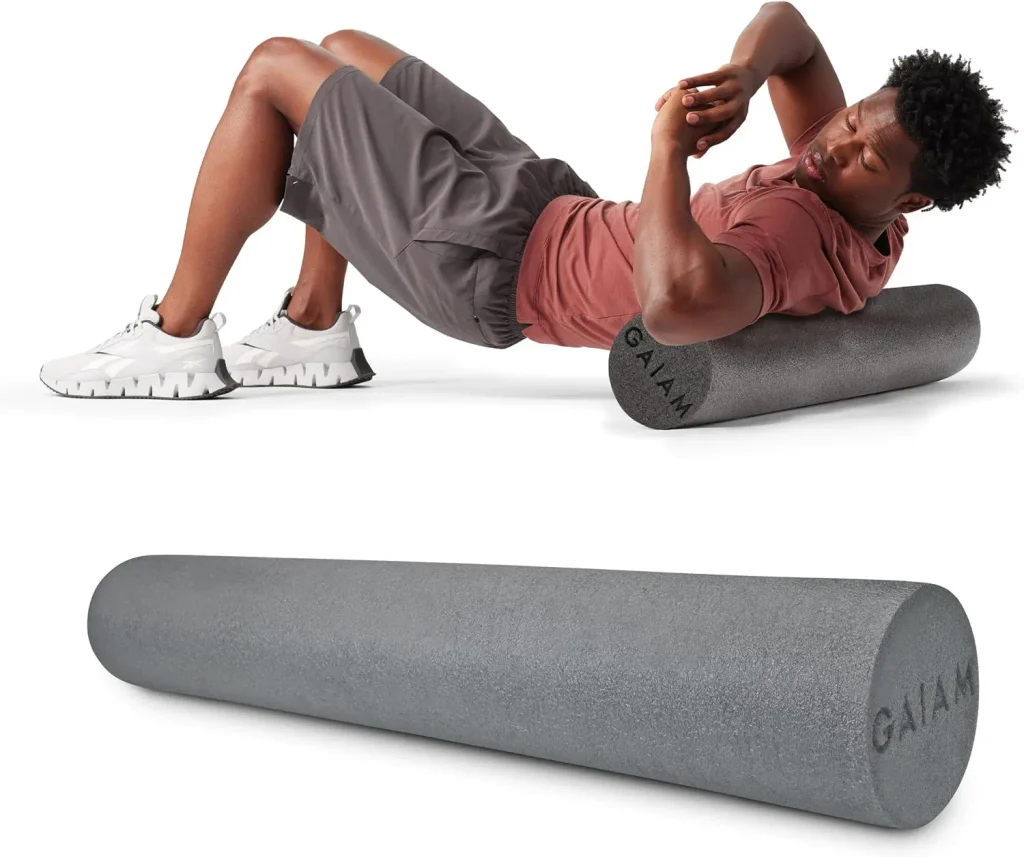
Best for: The familiar-brand full body, a textured 36-inch build from yoga’s house name.
- Full-Length 36-Inch Build: Spine-cradling coverage for recovery evenings.
- Textured Restore Surface: A moderate pattern between smooth and sharp.
- High-Density EVA Body: Firm support with a slight, honest give.
- Yoga-Native Branding: Designed by a house that knows the practice.
- Neutral Grey Finish: Studio-quiet looks for visible corners.
Pros:
- The guide’s most practice-native full-length roller
- Texture intensity pitched between the extremes
- Brand consistency with the mats most owners already use
Cons:
- Owner record smaller than the category leaders
- Mid-surface commit that specialists may outgrow
- Surface texture gathers visible dust
Restore With the Gaiam on Amazon
6. Retrospec Relief High-Density EPP Roller
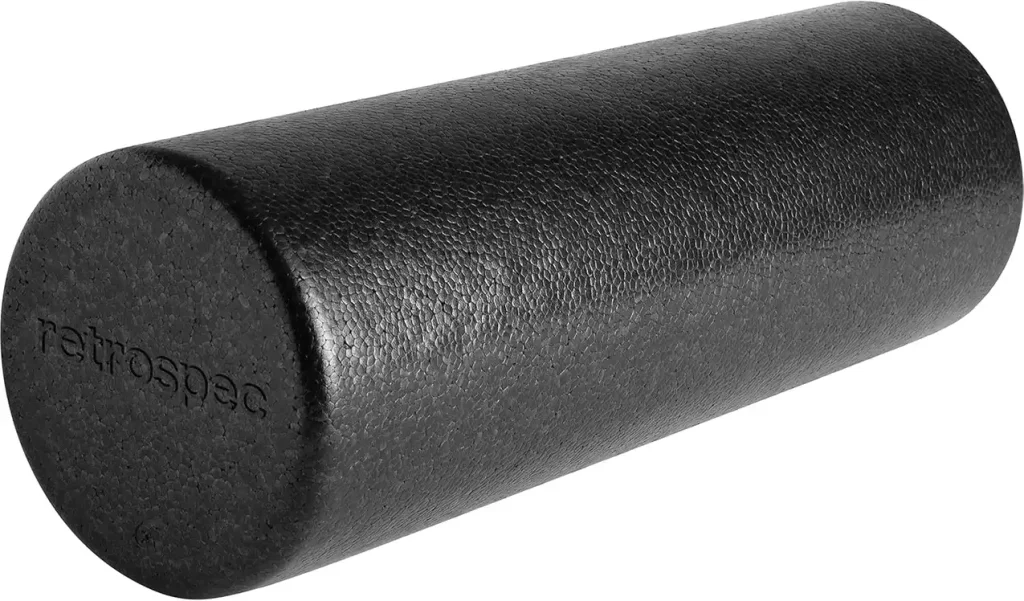
Best for: The extra-firm compact base, an 18-inch EPP cylinder at the guide’s lightest rung.
- Extra-Firm EPP Foam: The densest feel in the guide, unyielding by design.
- 18-Inch Compact Frame: Limb-line coverage with shelf-friendly storage.
- Smooth Water-Resistant Skin: Wipes clean and shrugs off sweat.
- Featherweight Carry: Light enough for any gym bag.
- Multi-Practice Positioning: Built for yoga, pilates, and physical therapy alike.
Pros:
- The firmest surface per spend in the guide
- Compact size that travels without thought
- Water-resistant skin that survives studio life
Cons:
- Firmness that beginners should approach gradually
- Short frame with no spine-cradling ambitions
- Smooth surface offering no targeted texture
Firm Up With the Retrospec on Amazon
7. TONE Fitness Firm High-Density Roller, 24″
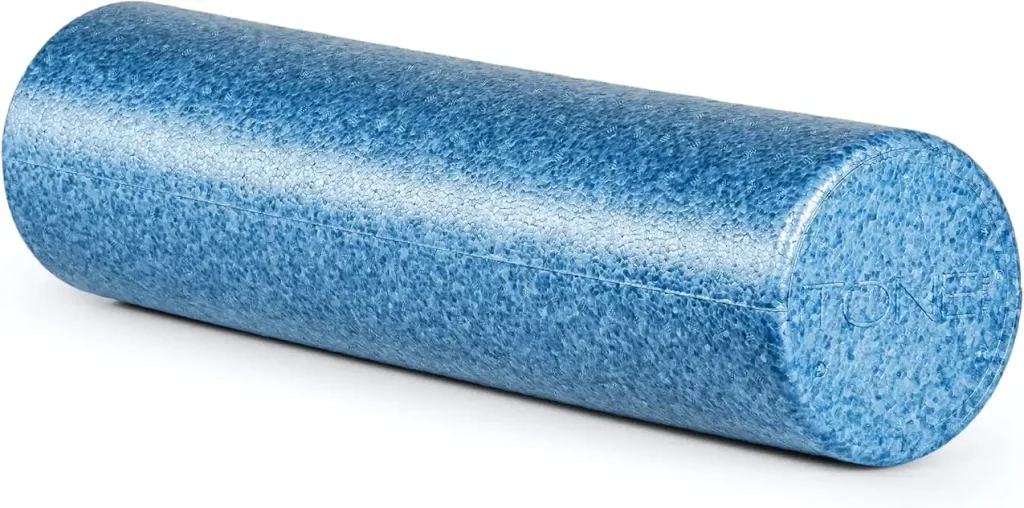
Best for: Mid-length studio duty, a 24-inch firm build sized between the extremes.
- 24-Inch Mid-Length Frame: Nearly every limb line without the storage tax.
- Firm High-Density Core: Consistent pressure for daily rolling habits.
- Speckled Blue Skin: A finish that hides studio wear.
- Travel-Friendly Weight: Bag-compatible without commitment.
- Entry-Friendly Figure: A low-cost start to a rolling habit.
Pros:
- The practical middle length most bodies want
- Owner approval growing steadily on a young listing
- Value positioning beside any mat bag
Cons:
- Young listing still writing its record
- Speckled skin lighter on grip than textured builds
- No full-length spine work possible
Press On With the TONE Fitness on Amazon
8. The Original Body Roller, High Density
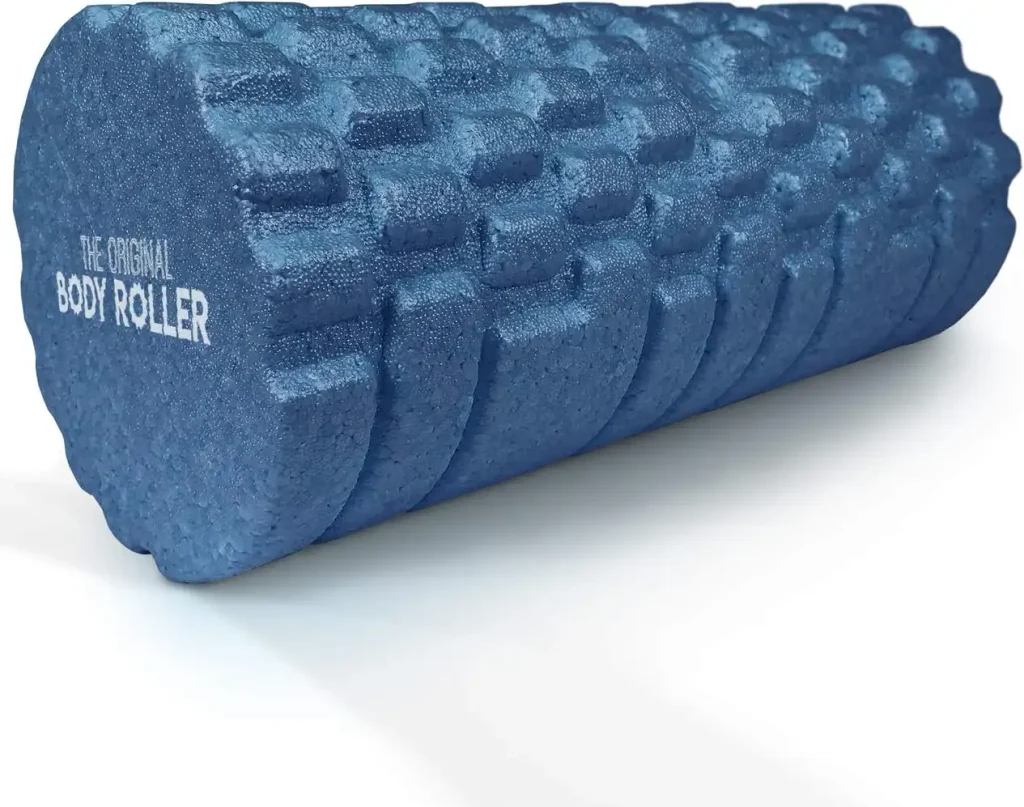
Best for: Textured firm release, a grid-surfaced build with a huge community behind it.
- Grid-Textured Surface: Ridged concentration aimed at knots.
- High-Density Molded Core: Full-weight rigidity through every pass.
- 13-Inch Massage Length: Focused work on quads, calves, and arms.
- Guide’s Value Textured Pick: Pattern work at a smooth-roller figure.
- Massive Owner Record: Tens of thousands of rolling sessions logged.
Pros:
- The deepest approval base among textured builds
- Knot-hunting texture at the guide’s friendliest tier
- Compact frame that lives beside the mat
Cons:
- Short length with no spine ambitions
- Intense texture for unconditioned tissue
- Core firmness that eases slightly with heavy years
Tackle Knots With the Original Body Roller on Amazon
9. Vulken Vibrating Foam Roller, 17″ Extra Long
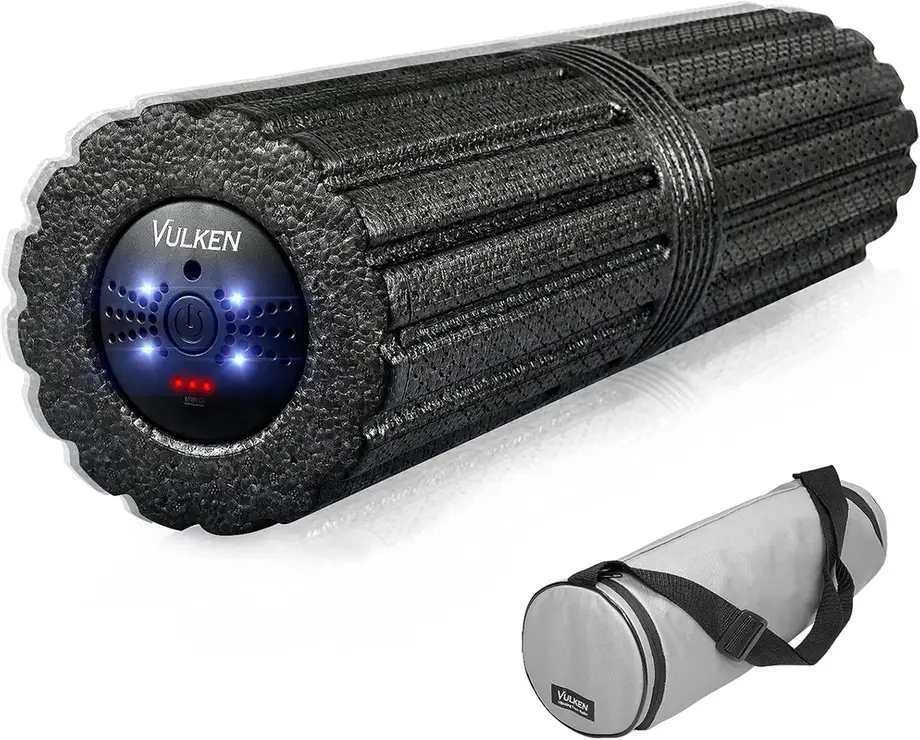
Best for: Vibration-assisted sessions, four speeds layered over an extra-long electric core.
- Four-Speed Vibration: Up to 3800 RPM layered across the surface.
- 17-Inch Extra-Long Frame: Coverage that outlasts most electric builds.
- Rechargeable Quick-Charge Core: Sessions between charges, not per charge.
- Digital Speed Controller: The setting visible at a glance.
- Carry Bag Included: The tech travels as a kit.
Pros:
- The guide’s only vibration-assisted build
- Vibration that eases guarded tissue into deeper contact
- Extra-long span rare among electric rollers
Cons:
- The guide’s steepest figure by a step
- Charge cycle that plain foam never needs
- Vibration intensity that sensitive evenings should dial low
10. ProsourceFit High Density Foam Roller 12×6
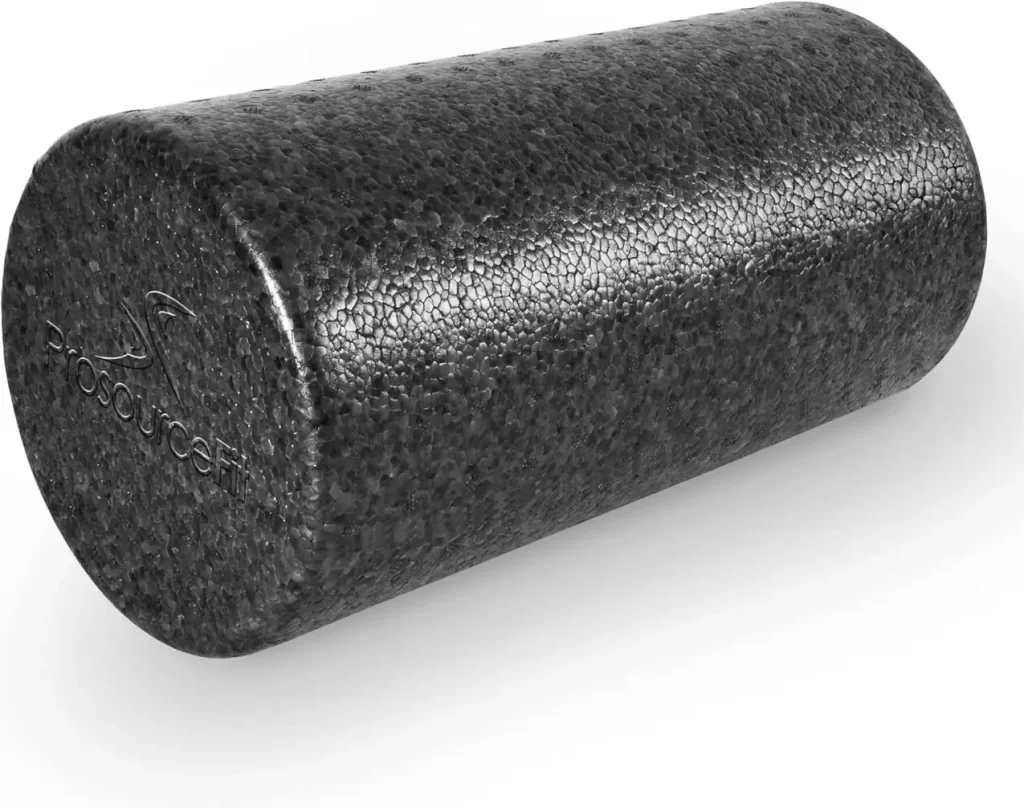
Best for: The compact companion, a twelve-inch speckled roller at the guide’s lightest figure.
- 12 x 6 Travel Format: The size that lives in a gym bag permanently.
- High-Density Speckled Surface: Firm contact with a hint of grip texture.
- EPP Construction: Water-resistant, shape-retaining, wipe-clean.
- Multi-Size Family: 12, 18, and 36 inches on the same proven build.
- Community-Proven Classic: Twenty thousand owners behind the pattern.
Pros:
- The guide’s lightest figure and lightest carry
- Deep owner record on a decades-stable design
- Pre-class calves-and-quads duty in seconds
Cons:
- Compact span limited to limb lines
- Speckled texture milder than grid builds
- Single-firmness feel across the family
Pack the ProsourceFit on Amazon
Frequently Asked Questions
Q1: Should I foam roll before or after yoga?
A: Both moments serve different jobs, and the difference is speed. Before practice, a quick, broader pass along the calves, quads, and upper back works as a wake-up, bringing circulation to the lines the class will ask about and easing the first minutes of opening poses. After practice, the same roller slows down, longer passes, longer pauses on the thick spots, guiding tissue from worked back toward rest. Practitioners who keep the roller beside the mat tend to do both without planning, and the pre-and-after pairing is where the habit compounds, because tissue that arrives warmed and leaves un-knotted simply feels better the next day.
Q2: How long should a foam rolling session last?
A: Five to ten focused minutes beats a long, grinding session every time. The useful format is thirty to sixty seconds per muscle line, slow passes with a few pauses where the tissue is dense, then move on, because tissue responds to patient pressure, not to duration spent guarding it. A full-body rotation touches six or seven lines and finishes inside ten minutes, and the biggest signal to stop is bracing, the moment the whole body tenses against the roller, the session has stopped helping and started rehearsing tension. Short and regular, before or after practice, is the pattern every long-term roller ends up keeping.
Q3: Firm or soft foam roller, which suits a yoga recovery routine?
A: Let the body part decide, not the ego. Firm, high-density builds serve the thick lines, quads, calves, glutes, IT bands, where pressure needs to outlast the tissue’s resistance, and they keep their shape for years of full-body load. Soft professional builds exist for the spine, the neck line, and anyone whose tissue argues loudly with pressure, and the reclined, full-length holds a soft roller enables are genuinely restorative in ways firm cylinders are not. Many practitioners end up with one of each, firm for the limbs after demanding sessions, soft for the back and the quiet evenings, and the pairing costs less than one premium massage gun.
Q4: Is it normal for foam rolling to hurt?
A: Discomfort, yes, pain, no, and the line between them is the skill. Rolling tight tissue produces a sensation practitioners describe as a good hurts, a spreading pressure that eases within the pause, while sharp, grabbing, or nerve-like sensations mean the placement or the intensity is wrong. The practical rules are to breathe through the pressure rather than hold against it, to ease off tissues that guard, and to work the neighborhoods of a tender spot rather than grinding its center. Sensitivity drops quickly with regular rolling, most practitioners notice the change inside two weeks, and a roller that consistently produces bad pain is simply the wrong density or the wrong surface for the body using it.
Q5: How do I clean and maintain a foam roller?
A: A damp cloth with mild soap after sweaty weeks, a soft brush for textured builds, and full air drying away from heat covers the entire ritual. Foam’s real vulnerabilities are mechanical, warped cores from a hot car trunk, dents from storage under weights, and skin tears from rough surfaces, so the storage habit matters more than any cleaner, upright in a corner or horizontal on a rack, within reach of the mat. Textured surfaces collect what skin leaves behind and want their brush pass monthly, while smooth and sealed builds wipe down in seconds. Treated this way, a quality cylinder outlasts the shoes it rolls beside, and the care takes less time than the savasana that follows practice.
Final Verdict
A roller earns its place beside the mat the same way any recovery tool does, by matching the tissue it meets and the minutes it will actually get, and the checklist is short, honest density for the body lying on it, a surface that suits the session, and a length that fits both the spine and the storage. Every cylinder in this guide carries that logic in a different direction, from soft professional cradles to extra-firm travelers, smooth classics to zoned grids, and one vibrating build for the tech-curious evenings. If you want the best foam rollers for yoga recovery, don’t overthink it—these are already:
✔ Pressure-Release Surfaces
✔ Session-Ready Densities
✔ Recovery-Ritual Essentials
Best Overall Pick – TriggerPoint Grid 2.0 (The Deep-Tissue Standard)
Best Value Full-Length – Amazon Basics 36″ Roller (The Everyday Workhorse)
Best Gentle Session – OPTP PRO-Roller Soft (The Spine-Safe Cradle)
Best Tech Upgrade – Vulken Vibrating 17″ (The Powered Session)