Best Cork Yoga Mats: 7 Picks for Yogis Who Want Natural Grip and Firm Support
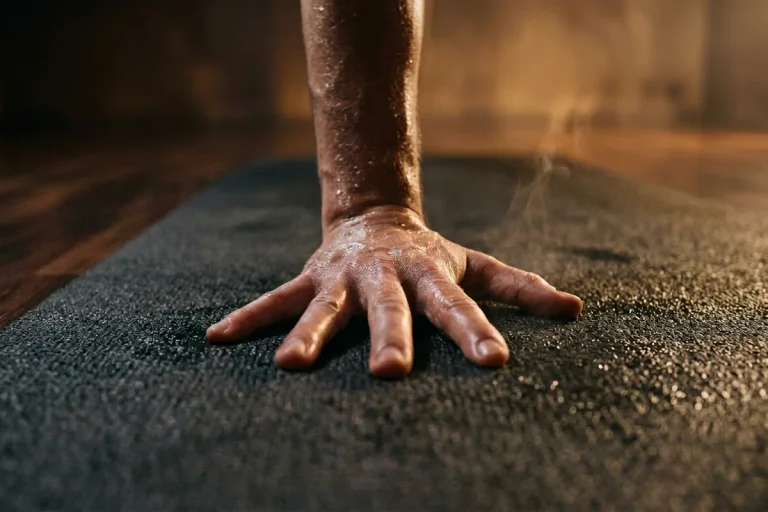
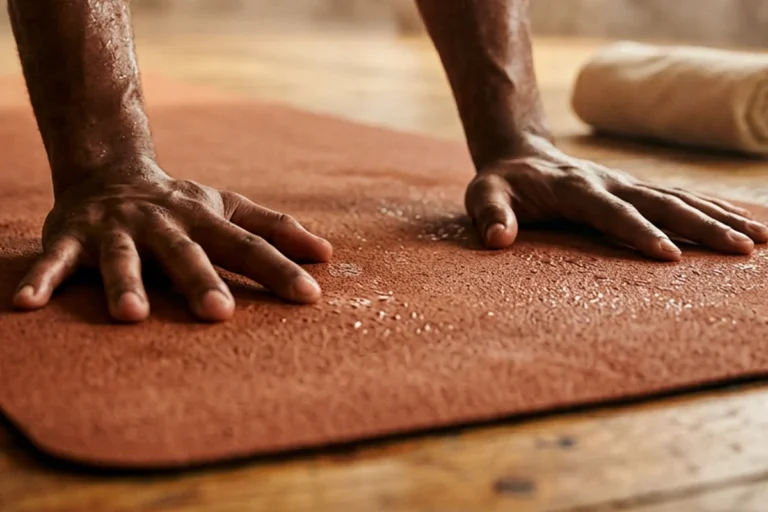
A cork yoga mat behaves like nothing else in the studio. Roll it out fresh and the surface feels smooth, almost restrained, and first-timers sometimes wonder what the fuss is about. Then the session warms up, palms and soles start to dampen, and something remarkable happens, the grip strengthens instead of fading. That reaction comes straight from the tree: cork oak bark carries a naturally waxy substance called suberin, and its cellular structure actually tightens its hold on moisture. A plastic foam mat does the opposite, slick when new and greasy once you sweat.
The other half of the story is support. Cork is not plush, it is firm in the way a well-made tool is firm, and that density is exactly why yogis with cranky wrists and demand-heavy balance poses keep converting. The seven mats below pair that natural cork face with engineered bases, natural tree rubber on the purist builds, cushioned TPE on the joint-first ones, so the surface grips while the foundation absorbs. Thicknesses run from a classic five millimeters to a joint-spoiling seven, and decks stretch from a standard sixty-eight inches to a sprawling eighty by twenty-six.
Every mat in this guide was checked against its live Amazon listing before earning a slot: the cork layer confirmed on the actual product, base materials matched to the claims, dimensions and extras verified, and the reputation of each build weighed against how it actually ships. What survived that screen is a spread of sizes, thicknesses, and philosophies rather than seven near-clones, because the right natural-grip surface depends on whether you carry your mat to class or unroll it once in a dedicated practice corner.
If your practice runs hot, if your hands slide on synthetic surfaces, or if you simply want gear made from renewable bark instead of petroleum, the best cork yoga mats below will show you exactly where the trade-offs sit and which build answers them.
Quick Picks
Best Overall: Body By Yoga Performance Cork Yoga Mat — the longest, thickest cork deck in the guide, weighted to lie dead flat and etched with alignment lines that earn their keep in every standing pose.
👉 Meet the Body By Yoga Performance Cork Mat on Amazon
Best Budget: Gaiam Cork Yoga Mat — the familiar five-millimeter classic with a moisture-resistant cork face, the easiest way to bring natural grip into an everyday rotation.
👉 Roll Out the Gaiam Cork Classic on Amazon
Best for Wide Practices: HAPBEAR Large Cork Yoga Mat — a three-foot wingspan of honeycomb cork that fits sprawling, mat-to-mat movement and throws in a five-band kit.
👉 See the HAPBEAR Wide Cork Mat on Amazon
Best Premium: GURUS Roots Cork Yoga Mat — a suberin-rich cork skin over a one-hundred-percent natural tree rubber base, the full-natural stack the purists ask for.
👉 Shop the GURUS Roots Cork Mat on Amazon
Comparison Table
| Product Name | Best For | Price Range | Check Price on Amazon |
|---|---|---|---|
| Gaiam Cork Yoga Mat | Classic everyday grip | Budget | View Gaiam Deal |
| Body By Yoga Performance Cork Yoga Mat | Extra-long alignment practice | Premium | Check Body By Yoga Offer |
| Satori Concept Cork Yoga Mat | Printed cork with a strap | Premium | See Satori Concept Offer |
| GURUS Roots Cork Yoga Mat | All-natural rubber build | Premium | View GURUS Roots Offer |
| Y O Gayo Premium Cork Yoga Mat | Engraved alignment marks | Mid | See Y O Gayo Offer |
| HAPBEAR Large Cork Yoga Mat | Double-width home practice | Budget | Check HAPBEAR Offer |
| StrongTek Cork & TPE Yoga Mat | Joint-first cushioning | Budget | View StrongTek Offer |
Buyer’s Guide
The best cork yoga mats are separated from the gimmicks by a handful of concrete details, and knowing them turns a confusing wall of near-identical listings into a short conversation with yourself. This walkthrough covers the six that matter, then the one expectation worth correcting before you spend a dime.
1. How Cork Grip Actually Works
Cork grips in reverse of almost every other surface. Dry, it feels understated, almost smooth under the palms. Damp, it locks in. The bark’s honeycomb of tiny cells wicks moisture outward, and suberin, the same waxy compound that makes cork water-resistant in wine stoppers and flooring, turns that moisture into traction rather than slip. This is why cork has become the surface of choice for hot yoga and heavy-sweat flows, the wetter the practice, the harder the mat holds. A PVC or TPE-top mat runs the other direction, most tacky when new and most treacherous when damp. Give any cork face a few sessions to break in, its grip deepens as the surface slightly roughens with use.
2. Matching Thickness to Your Practice
Cork adds density, not softness, so the base layer underneath decides how the mat treats your joints. A five-millimeter build is the studio classic, firm underfoot, honest for balance poses, and the most packable. Six millimeters splits the difference, enough give for kneeling sequences without turning single-leg holds wobbly. Seven millimeters with a cushioned base is where knees, wrists, and sitting bones stop negotiating, the right call for restorative work, yin practice, or anyone practicing on hard floors. The trade is real, every added millimeter of softness makes micro-adjustments in standing poses a touch less precise, so choose for the poses you hold longest.
3. Size and Weight Reality
Standard mats run sixty-eight by twenty-four inches, and tall yogis know exactly how that ends, heels on the floor, head off the back edge. The extra-long decks here stretch to eighty inches and widen to twenty-six, a difference you feel within one sun salutation. Width matters in its own way, a thirty-six-inch mat opens room for arm balances, floor Pilates, and practice shared with a partner or a very curious dog. All that cork and rubber has mass, though, and the range in this guide runs from a featherweight two-point-two pounds to a foundation-like nine-point-nine. Decide honestly whether the mat travels or lives rolled out in a corner, and let that answer size the deck.
4. Natural Rubber or TPE Base
Flip every mat here and you find one of two philosophies. Natural tree rubber is the purist’s base, dense, heavy, and grippy against the floor, with the full-natural builds pairing it with sustainably harvested cork for a stack with no synthetic layer at all. TPE is the modern compromise, lighter, less resource-intensive to produce, and cushioned, and the best TPE-base cork mats treat it as a shock absorber under a genuine cork face rather than a replacement for one. Rubber-base mats reward dedicated home practice and hot rooms, TPE-base mats suit commutes, joint-sensitive practitioners, and anyone who wants cork grip without the bulk. Neither is wrong, they are built for different rooms.
5. Prints, Lines, and Extras
Cork takes engraving and printing beautifully, which is where the guide’s personality lives. Laser-etched alignment lines put permanent center and side markers under your hands, a quiet coaching aid in every standing pose. Full-surface prints turn a practice mat into a piece of landscape art without changing what is underfoot. Beyond the surface, look at what rides in the box, carry straps and bags make the heavier decks portable, and one bundle here adds a five-piece resistance band kit that effectively doubles as a home gym. Extras are nice, but weight them last, surface and base decide whether a mat stays in your rotation.
6. Caring for a Cork Mat So It Lasts
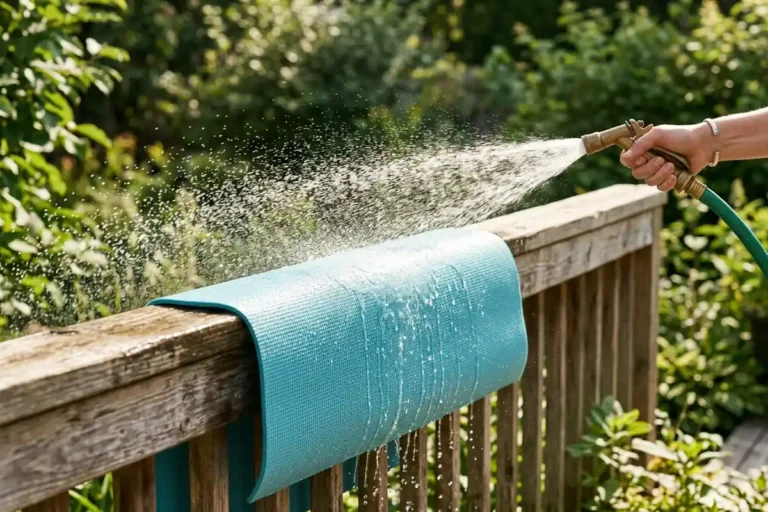
Cork is low-maintenance but not no-maintenance. After practice, let the mat air-dry flat or loosely rolled rather than sealing damp cork in a tight roll, trapped moisture is the enemy of any natural surface. Clean with a light spritz of water and a drop of mild soap, wipe, and dry, never soak it or run it through a machine, and skip harsh solvents that strip the natural waxes doing the odor resistance work. Keep it out of prolonged direct sun, which can fade printed faces and dry the grain. Treated this way, a cork mat’s surface tends to improve with age, the grip deepening as the top layer gently roughens.
One Mistake to Avoid: Buying Cork Expecting Foam Softness
The most common regret in cork reviews is not a flaw in the material, it is a mismatch in expectation. Cork is firm, deliberately so, and a practitioner who loves the sink of a thick foam mat may unroll a five-millimeter cork deck and feel betrayed by a surface that rewards balance by refusing to disappear. If plush is the priority, choose the thickest layered build with a cushioned base, seven millimeters here, and treat the cork as the grip layer it is. Do not buy a firm natural-grip mat and then punish it for not being a pillow, the two materials simply answer different questions.
Best Cork Yoga Mats: 7 Picks for Yogis Who Want Natural Grip and Firm Support
The seven picks ahead are ordered to build on each other, a familiar classic first, then progressively bigger, thicker, and more specialized builds, so by the time you reach the final verdict you will know precisely which combination of width, cushion, and base material fits your practice. Each pick carries its own photos, a straight explanation of who it serves, the feature set that justifies its slot, and an honest look at where it falls short.
1. Gaiam Cork Yoga Mat
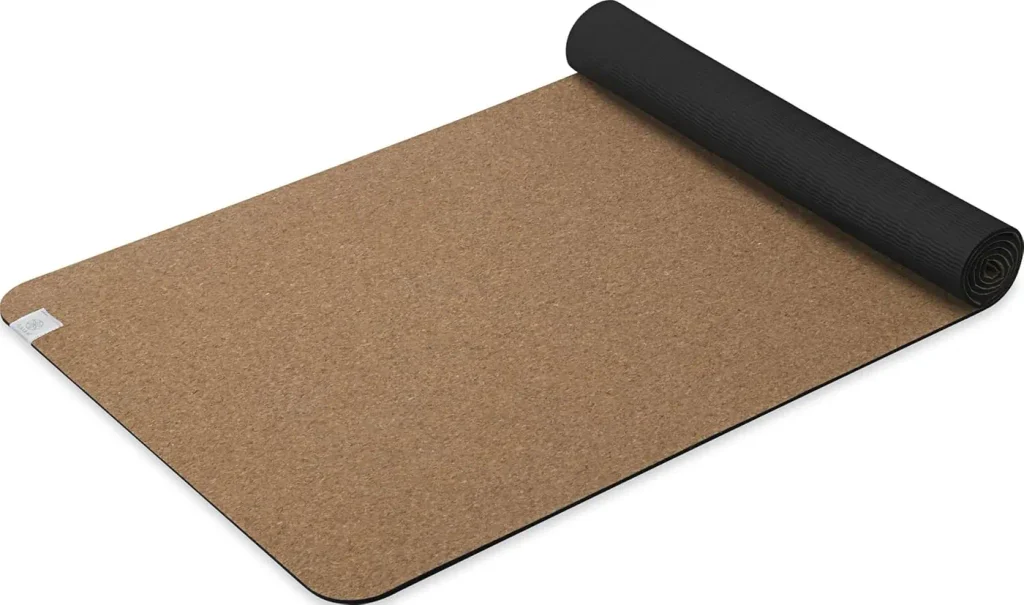
Best for: Everyday cork grip in the most familiar studio format, a five-millimeter classic that keeps balance work honest.
- Cork-on-TPE Layering: A natural speckled face bonded to a springy synthetic back.
- Moisture and Odor Resistance: Cork’s waxy suberin shrugs off sweat and smell between sessions.
- Textured Non-Slip Backing: Holds hardwood and tile without leaving marks.
- Classic Studio Sizing: Sixty-eight by twenty-four inches rolls slim for class commutes.
- Approachable Firmness: Five millimeters keeps single-leg poses truthful underfoot.
Pros:
- Dependable design from a brand that has shipped cork for years
- The easiest rung to step onto the cork category from
- Light in the bag for a natural-surface mat
Cons:
- Five millimeters feels firm during kneeling sequences
- Sixty-eight inches runs short for practitioners over about five-eight
- Solid single tone shows early wear at the hand and foot zones
Step Onto the Gaiam Cork Mat on Amazon
2. Body By Yoga Performance Cork Yoga Mat
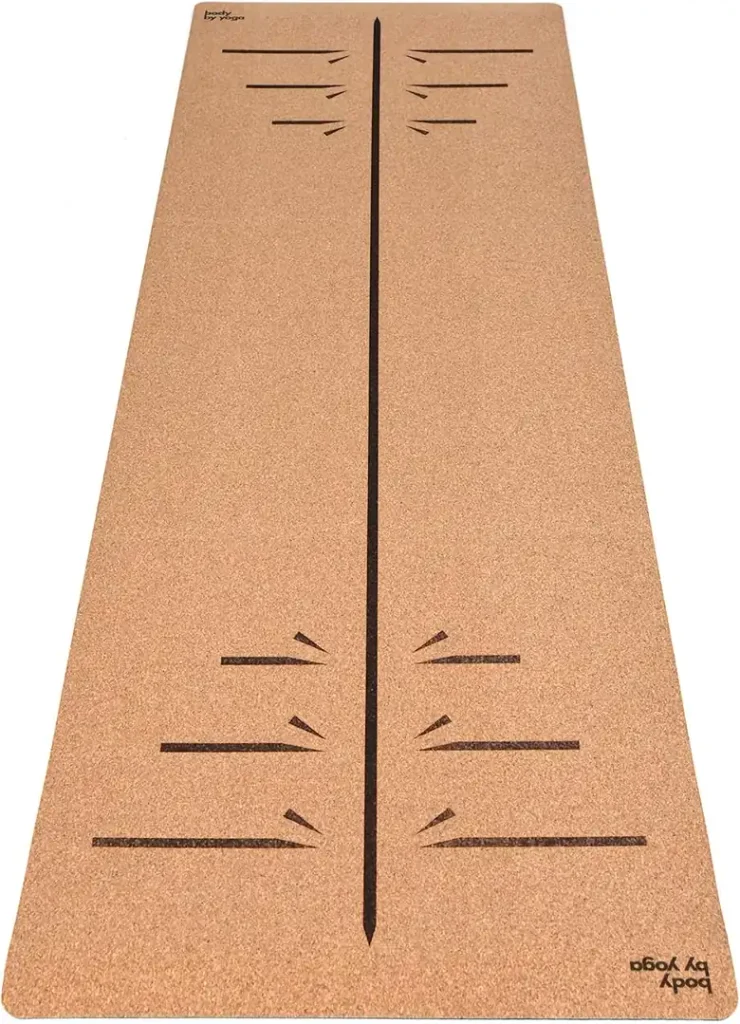
Best for: Tall practitioners and alignment sticklers who want the longest, flattest cork deck in the guide.
- Extra-Long Deck: Eighty by twenty-six inches gives full sprawl room to tall frames.
- Thick Cork-on-Rubber Build: A deep natural cork face over a high-density tree rubber base at six-and-a-quarter millimeters.
- Stay-Flat Weight: Nine-point-nine pounds press the edges down so corners never curl.
- Etched Alignment Lines: Center and side markers guide hand and foot placement in every pose.
- Grip That Builds: The cork face bites harder as the session heats up.
Pros:
- The most room of any mat here, length and width together
- Lies dead flat from the first unroll, no corner tug-of-war
- Alignment lines earn daily use instead of living as decoration
Cons:
- Carrying nine-point-nine pounds to class is a commitment
- Sits at the upper rung of the guide
- The cork face needs a few sessions to reach full traction
Grab the Body By Yoga Extra Long Cork Mat on Amazon
3. Satori Concept Cork Yoga Mat
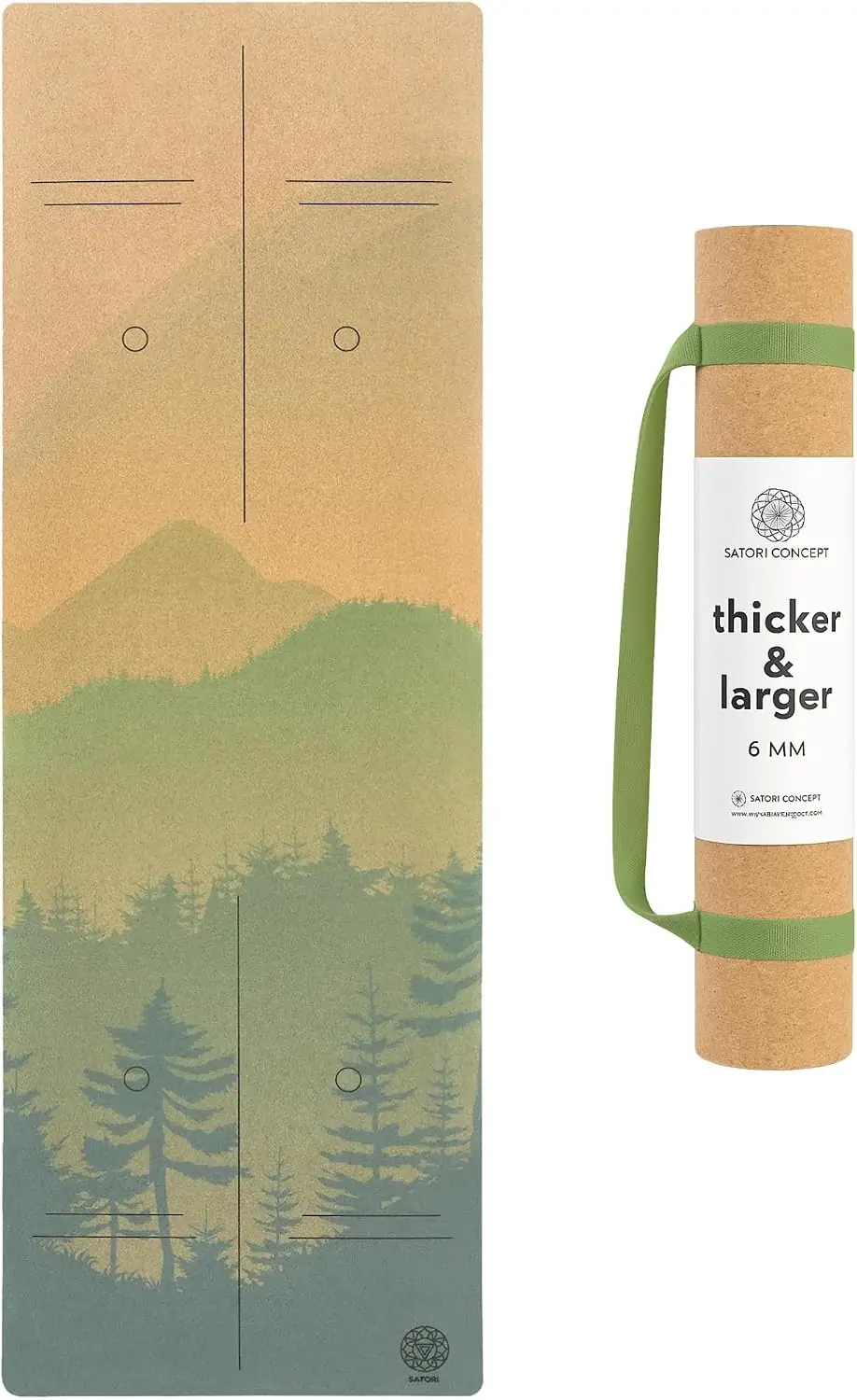
Best for: A mat that performs like a premium tool while wearing a piece of mountain art.
- Highland Print Cork Face: Sustainably harvested organic cork wearing a serene ridgeline scene.
- Generous Runway: Eighty by twenty-six inches matches the longest decks in the guide.
- Dense Tree Rubber Reverse: A natural base that locks the mat to hard floors.
- Sweat-Activated Traction: Grip strengthens the moment palms dampen.
- Carry Strap Included: A simple sling comes in the box for studio days.
Pros:
- The print has real depth, scenery without gimmick
- Full-size deck with a natural rubber base beneath
- Strap included on a mat this size is a genuine courtesy
Cons:
- The ridgeline design will not suit practitioners of plain surfaces
- Carries the weight of an eighty-inch natural build
- Print care means keeping it out of long sun exposure
Browse the Satori Concept Cork Mat on Amazon
4. GURUS Roots Cork Yoga Mat
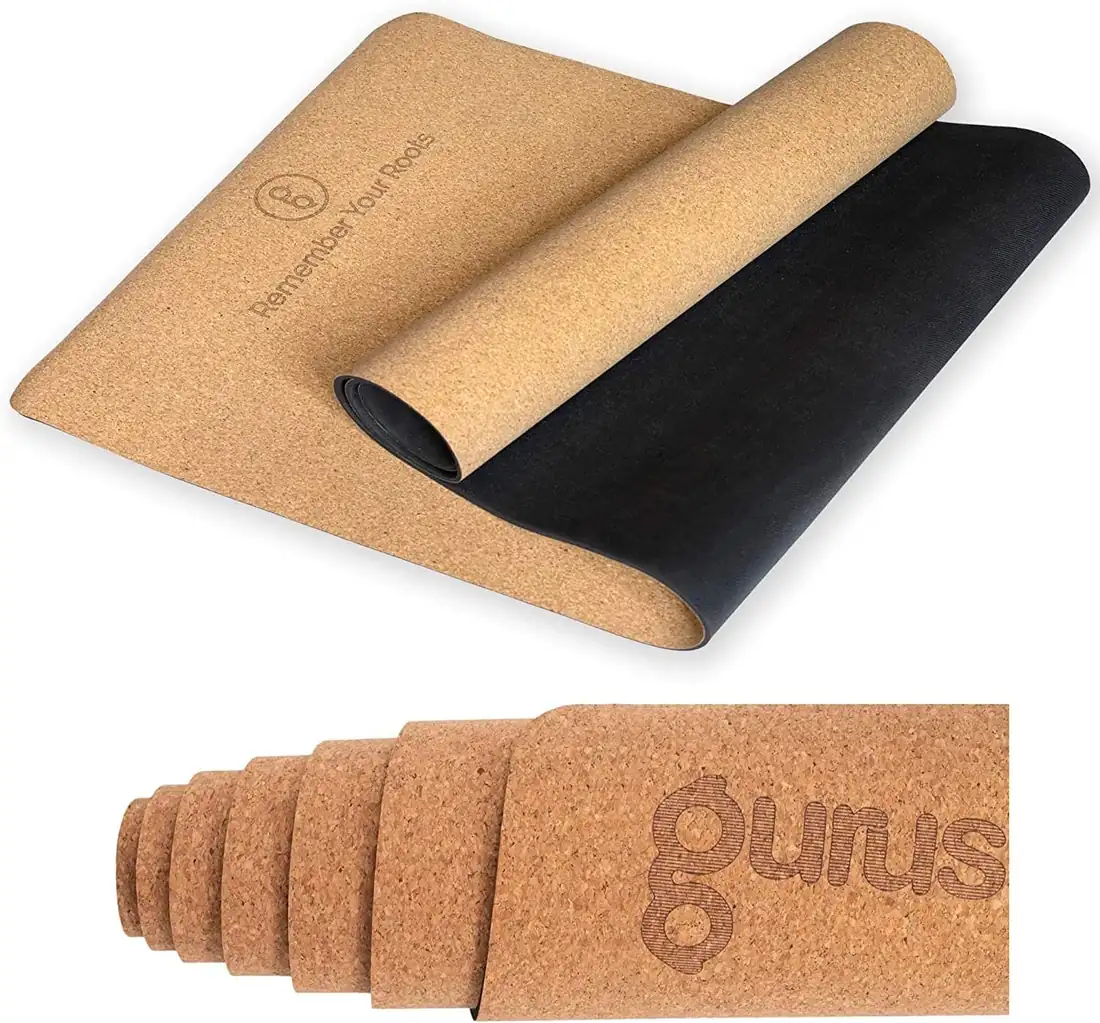
Best for: Purists who want every layer natural, from the cork skin to the tree rubber beneath it.
- Suberin-Rich Surface: Cork’s natural wax resists microbes and odor on contact.
- Fully Natural Base: One hundred percent tree rubber beneath the bark, no synthetic layer in the stack.
- Heavy-Duty Grip: The Roots face holds firm through vigorous vinyasa.
- Sweat-Proof Build: Moisture works with the grain instead of soaking into it.
- Responsibly Harvested Cork: Bark taken on rotation keeps every tree standing.
Pros:
- The all-natural stack, cork over tree rubber, start to finish
- Odor resistance that survives back-to-back hot classes
- Grip density that rewards a committed practice
Cons:
- Firm five-millimeter feedback will not flatter sensitive knees
- Sits at the top rung of the guide
- Natural rubber carries an honest scent that airs out over the first weeks
Bring Home the GURUS Roots Mat on Amazon
5. Y O Gayo Premium Cork Yoga Mat
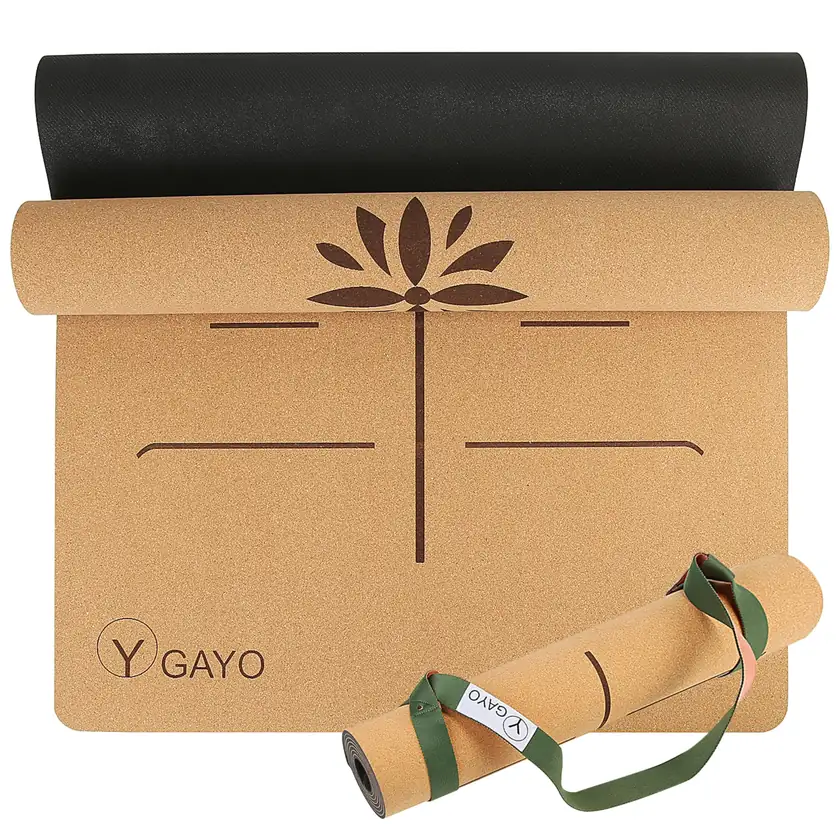
Best for: Engraved alignment guidance on a mid-stack cork build that rolls out flat every time.
- Laser-Engraved Alignment Lines: Precise center markers etched straight into the cork veneer.
- Cork Veneer Over Dense Rubber: A natural skin bonded to a thick rubber foundation.
- Zero-Curl Roll Behavior: Unrolls flat and stays that way within minutes.
- Twenty-Six Inch Width: Extra breadth beyond the standard studio cut.
- Balanced 5mm Feel: Firm feedback with a trace of give at mid-thickness.
Pros:
- Engraved lines survive use, they cannot peel or wash off
- One of the quickest mats here to lie completely flat
- Wider than standard without jumping to a double-width deck
Cons:
- Alignment markings dominate the look, minimalists may hesitate
- Five millimeters stays firm through long kneeling holds
- No extras in the box beyond the mat itself
See the Y O Gayo Alignment Cork Mat on Amazon
6. HAPBEAR Large Cork Yoga Mat
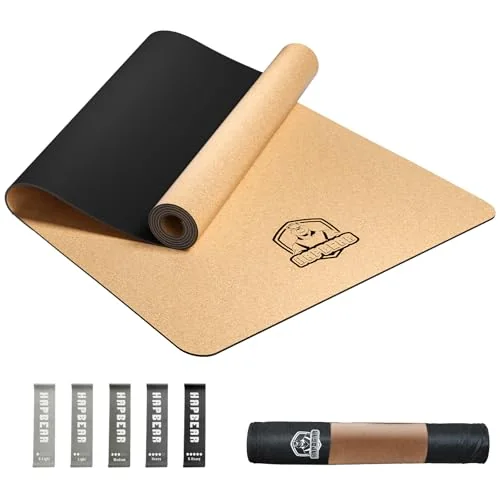
Best for: Shared spaces and sprawling styles, a double-width cork surface with a bonus band kit.
- Three-Foot Wingspan: Thirty-six inches wide opens room for floor work and shared practice.
- Honeycomb Porous Cork: An open grain pattern that breathes and grips.
- Anti-Tear TPE Base: A tough back layer that shrugs off floor friction.
- Five Resistance Bands Included: A compact strength kit rides along in the box.
- Carry Bag Included: The whole bundle travels in one sling.
Pros:
- Genuinely two mats wide, the roomiest cork surface here
- The bundle doubles the box’s usefulness beyond yoga
- Six-millimeter cork face keeps natural grip at thickness
Cons:
- A three-foot footprint demands a committed floor space
- The included bands are entry-level companions, not the main event
- The youngest brand line in the guide, with less long-term track record
Get the HAPBEAR Bundle Cork Mat on Amazon
7. StrongTek Cork & TPE Yoga Mat
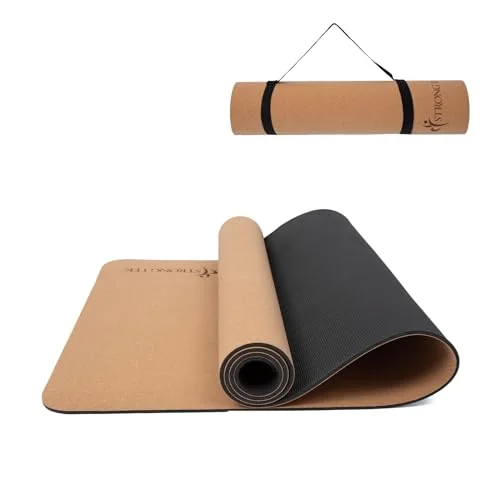
Best for: Knee-heavy sequences, the plushest cork stack here at the lightest carry weight.
- Deepest Cushion Here: Seven millimeters of layered give for sensitive joints.
- Moisture-Reactive Cork Top: Traction rises as hands and feet warm up.
- Featherweight Carry: Two-point-two pounds make this the lightest pick in the guide.
- Carry Strap Included: Sling it over a shoulder for studio days.
- Joint-First Layering: A cushioned base beneath a firm natural face.
Pros:
- The friendliest mat here for wrists, knees, and sitting bones
- Light enough to forget it is in the bag
- Cork grip survives the soft build, sweaty palms still lock in
Cons:
- Deep cushion softens precision in single-leg balance holds
- Sticks to the standard twenty-four-inch width
- The cork layer is thinner than on the rubber-base builds
Pick Up the StrongTek Cork Mat on Amazon
Frequently Asked Questions
Q1: Do cork yoga mats really grip better when you sweat?
A: Yes, and the direction matters as much as the amount. Most synthetic surfaces lose traction as moisture builds, while cork’s cellular structure and natural suberin wax convert moisture into friction, the damp palms of a heated class actually tighten the surface’s hold. Expect a short break-in period while the top grain roughens slightly, after which the wet-grip advantage becomes obvious. This is precisely why hot yoga studios led the switch to cork.
Q2: How thick should a cork yoga mat be?
A: Let your joints and your style decide between the three common builds. Five millimeters is the studio standard, firmest underfoot and truest for balance poses. Six millimeters adds kneeling comfort while keeping most of the stability. Seven millimeters with a cushioned base is the joint-protection tier, best for restorative practice, yin holds, or hard floors. Remember that cork itself contributes density rather than softness, the base layer beneath it is what your knees actually feel.
Q3: Do cork yoga mats smell?
A: Cork carries a mild, earthy scent when new, and the natural rubber bases on the premium builds add a little more of their own for the first weeks. Both air out quickly with regular use and ventilation. What cork notably does not do is develop the sour, locked-in odor that foam mats pick up over months of hot practice, suberin gives the surface a natural resistance to the microbes responsible. A mat that dries between sessions stays fresh almost indefinitely.
Q4: Are cork yoga mats good for hot yoga?
A: They are arguably the best surface for it. The sweat-activated grip means a dripping practice makes the mat more secure rather than less, and the dense rubber-base builds anchor themselves to hot studio floors without sliding. The practical consideration is weight, the deepest natural builds are not mats you carry across town daily, so hot-home practitioners get the full benefit while commuters may prefer a lighter cork-on-TPE layering. Either way, the surface itself thrives where foam mats get dangerous.
Q5: How do you clean a cork yoga mat?
A: Keep it simple, a spritz of water with a drop of mild soap, a soft wipe, and air-dry. Never soak a cork mat or machine-wash it, and skip harsh cleaners, the waxes that give cork its odor resistance live near the surface. Let it dry flat or loosely rolled before storing, and keep it out of prolonged direct sunlight to protect both the grain and any printed design. Five minutes of care a week keeps the surface improving rather than degrading, which is exactly the arc a good cork mat follows.
Final Verdict
Cork rewards the honest practice. It grips hardest exactly when the session gets real, it comes from bark harvested without felling a single tree, and with the base matched to your joints it will outlast several generations of foam mats. Pick the deck size for the room you actually practice in, pick the thickness for the knees you actually have, and let the extras be a bonus rather than the deciding vote. If you want the best cork yoga mats, don’t overthink it—these are already:
✔ Tested
✔ Reviewed
✔ Proven
Best Overall Pick – Body By Yoga Performance Cork Yoga Mat
Best Budget – Gaiam Cork Yoga Mat
Best Premium – GURUS Roots Cork Yoga Mat
Best for joint-friendly cushioning – StrongTek Cork & TPE Yoga Mat