9 Best Yoga Mats for Carpet for Home Yogis Who Want Better Stability on Soft Floors
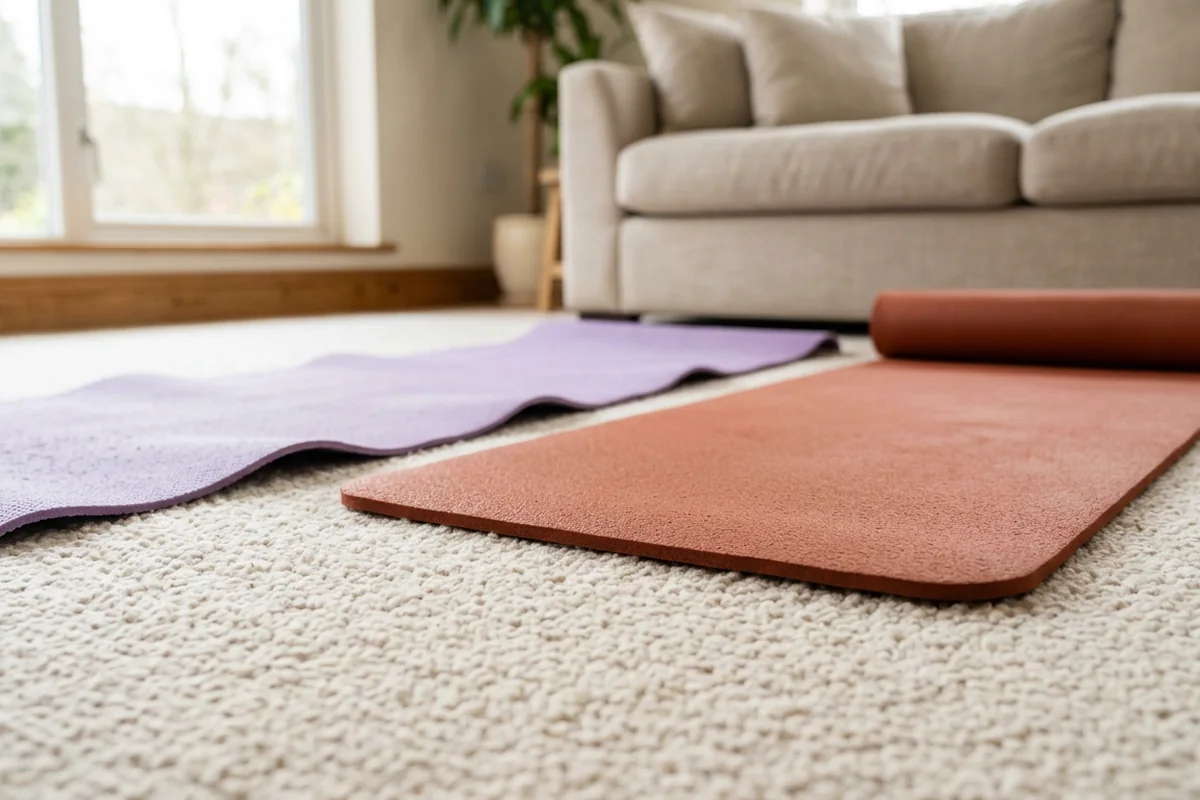
Carpet looks like the friendliest surface in the house until you try to hold a pose on it. The best yoga mats for carpet exist because soft floors break yoga’s basic bargain, a mat is supposed to be the stable layer between you and the ground, but on carpet the mat itself starts to sink, slide, and telegraph every fiber ridge back through your wrists. Practitioners who unroll on plush bedroom carpet know the feeling, a warrior two where the front foot wanders, a plank where the hands wobble, a balance pose that defeats itself before the breath even settles.
The problem is physics, and the fix is understanding it. A soft floor absorbs nothing evenly, it lets the heaviest points sink deepest, so a thin mat simply takes the carpet’s shape, and a too-soft mat becomes a hammock for your heels. What works on carpet is the opposite recipe from what works in a studio, density over squish, grip underneath rather than just on top, and enough thickness to float the pose above the pile without letting it wade into it. Materials matter too, dense PVC and high-density foam resist the compression that turns carpet into an obstacle course, while rubber and textured undersides lock onto carpet fibers the way they lock onto hardwood.
The other half of the carpet equation is weight distribution. A mat that spreads load across a wider footprint sinks less, which is why oversize decks and dense six-millimeter builds consistently outperform their studio cousins at home, and why the humble half-inch foam mat, useless on hardwood instability grounds, turns out to be a carpet secret weapon when it is engineered with a high-density core.
Everything that follows applies that physics to the buying decision, because carpet practice rewards the right mat more dramatically than any other home surface.
Quick Picks
Best Overall: Liforme Classic Yoga Mat — the natural-rubber base that locks onto carpet fibers where slick decks wander.
👉 Meet the Liforme Carpet Anchor on Amazon
Best Budget: Fitvids 1/2″ Extra Thick Yoga Mat — the community-proven density play at the guide’s lowest rung.
👉 Check the Fitvids Thick Mat Price on Amazon
Best for Deep Cushion: Gaiam Essentials Thick 10mm Yoga Mat — maximum float over a punishing pile.
👉 Give Your Knees the Gaiam 10mm on Amazon
Best Premium: Manduka PRO Yoga Mat — lifetime-grade density that never lets the floor beneath show through.
👉 Invest in the Manduka PRO on Amazon
Comparison Table
| Product Name | Best For | Price Range | Check Price on Amazon |
|---|---|---|---|
| Liforme Classic Yoga Mat | Grip on soft floors | Premium | View Liforme Offer |
| Manduka PRO Yoga Mat | Lifetime density | Premium | Check Manduka PRO Offer |
| ActiveGear Large Yoga Mat | Oversize home studio | Mid | See ActiveGear Offer |
| Gaiam Essentials Thick Yoga Mat | Deep carpet cushion | Budget | View Gaiam Offer |
| Gruper Non-Slip Yoga Mat | Two-sided value grip | Budget | See Gruper Offer |
| Retrospec Solana Yoga Mat | Half-inch stability | Budget | Check Retrospec Offer |
| Fitvids Yoga Mat | Proven value density | Budget | View Fitvids Offer |
| Circuit Fitness by Marcy Yoga Mat | Compact ribbed grip | Budget | See Circuit Fitness Offer |
| WOHAO 7-Fold Yoga Mat | Fold-away storage | Mid | Check WOHAO Offer |
Buyer’s Guide
Choosing the best yoga mats for carpet means reversing several studio instincts, and six checkpoints cover the whole decision from pile height to storage. Work through them in order, then read the one misconception that sends more carpet practitioners home with the wrong mat than any other.
1. Match the Mat to Your Pile Height
Carpet is not one surface, it is a family of them, and pile height decides everything. Low-pile and flatweave carpets behave almost like hard floors, most quality mats work on them, and the decision comes down to grip. Medium pile is where mats start to disappear, and the dense six-to-eight-millimeter builds earn their keep by floating above the fibers instead of mirroring them. High-pile and shag are the honest limit of the category, no yoga mat truly conquers deep carpet, and practitioners with plush bedrooms should either choose the thickest high-density decks here or accept that a firm underlay, a plywood board, or a different room is part of the answer. Press your palm into the carpet, if your fingers sink past the first knuckle, buy for the worst case, not the average moment.
2. Density Beats Thickness on Soft Floors
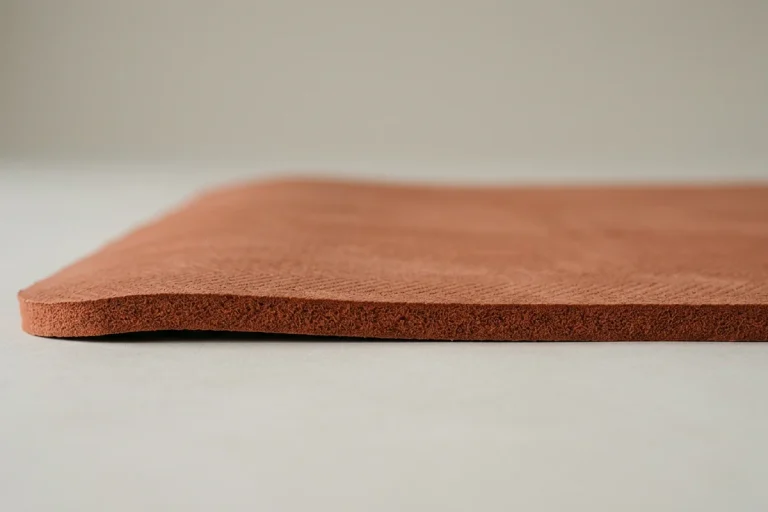
The studio rule says thicker equals gentler, and the carpet rule reverses it. On a soft floor, a plush airy mat simply continues the sinking that the carpet started, your heel travels through the foam and into the pile until the whole stack bottoms out unevenly. What creates stability is compression resistance, high-density PVC and firm NBR cores that spread weight across the surface instead of letting it punch through, and that is why several of the guide’s thinnest mats outperform thicker soft ones on carpet. The winning formula reads dense first, then thick enough to clear the pile, in that order.
3. Underside Grip Is the Whole Ballgame
On hardwood, a mat’s base just needs to be non-slip, on carpet it needs to grab. Rubber and textured undersides bite into carpet fibers and stop the slow drift that turns every sun salutation into a mat-repositioning drill, while smooth closed-cell bases behave like sleds on plush pile. Weight contributes too, a heavier mat presses itself into engagement with the floor, and oversized footprints distribute the load so no single pose can peel an edge loose. Practitioners who flow vigorously should weight this checkpoint above all others, a wandering mat is the fastest way to lose trust in a home practice space.
4. Size Up for Space and Sinking
Carpet practice changes the arithmetic of mat size. Wider decks matter because soft floors reduce your effective footprint, the edges you would never touch on hardwood become balance references when the ground itself moves, and a double-wide build returns that margin. Extra length does the same for tall practitioners, keeping hands and heels on a surface that is itself compressing beneath them. The oversized mats in this guide, six-by-four decks among them, exist precisely because home practice on soft floors rewards area, and the difference between a standard cut and an oversize one is most obvious exactly when the pose gets hard.
5. Materials That Handle Carpet Life
Three material families cover the carpet brief. High-density PVC, the Manduka recipe, resists compression for decades and shrugs off the dust that carpet sheds into a mat’s underside. NBR and TPE foams bring more accessible density, with textured faces that add grip over the pile. Natural rubber, the Liforme approach, pairs a stone-stable base with the best floor-locking friction in the category. All three survive carpet’s specific hazards, fibers, dust, and the occasional pet, though rubber and closed-cell builds clean up more gracefully after the carpet transfers its lint upward.
6. Storage and the Home-Practice Reality
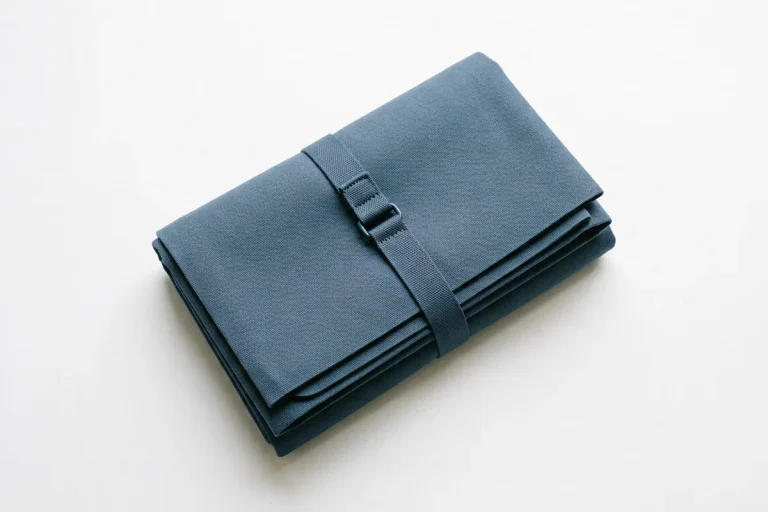
A carpet mat lives in a living space, not a studio bag, and that shapes the smart purchase. Weight matters less when the mat never commutes, so the heaviest, densest builds become practical for the first time. Storage becomes the real constraint, mats that fold, like the seven-fold entry here, disappear into a closet between sessions, while permanent installations prefer a flat corner and a rolled edge that will not curl. Consider how often the practice space doubles as something else, and let that answer choose between the fold-aways and the stay-down decks.
One Mistake to Avoid: Blaming the Mat When the Pile Is the Problem
The costliest carpet-practice mistake is buying progressively thicker soft mats hoping to fix a wobble that thickness cannot touch. Each plush layer sinks further into the pile, the wobble compounds, and the practitioner concludes that home practice simply does not work, when a dense mat half the depth would have floated the pose perfectly. Diagnose before you buy, press the carpet, feel whether it is the pile or the subfloor doing the moving, and match the purchase to the diagnosis. Softness answers a joint problem, density answers a floor problem, and carpet practice needs the second answer far more often than the first.
9 Best Yoga Mats for Carpet for Home Yogis Who Want Better Stability on Soft Floors
The nine mats ahead are ordered from premium stability to value depth and fold-away convenience, so wherever your carpet sits on the pile chart, the right build is a short scroll away. Each pick carries its own photos, the honest carpet behavior, and the room it expects to live in.
1. Liforme Classic Yoga Mat
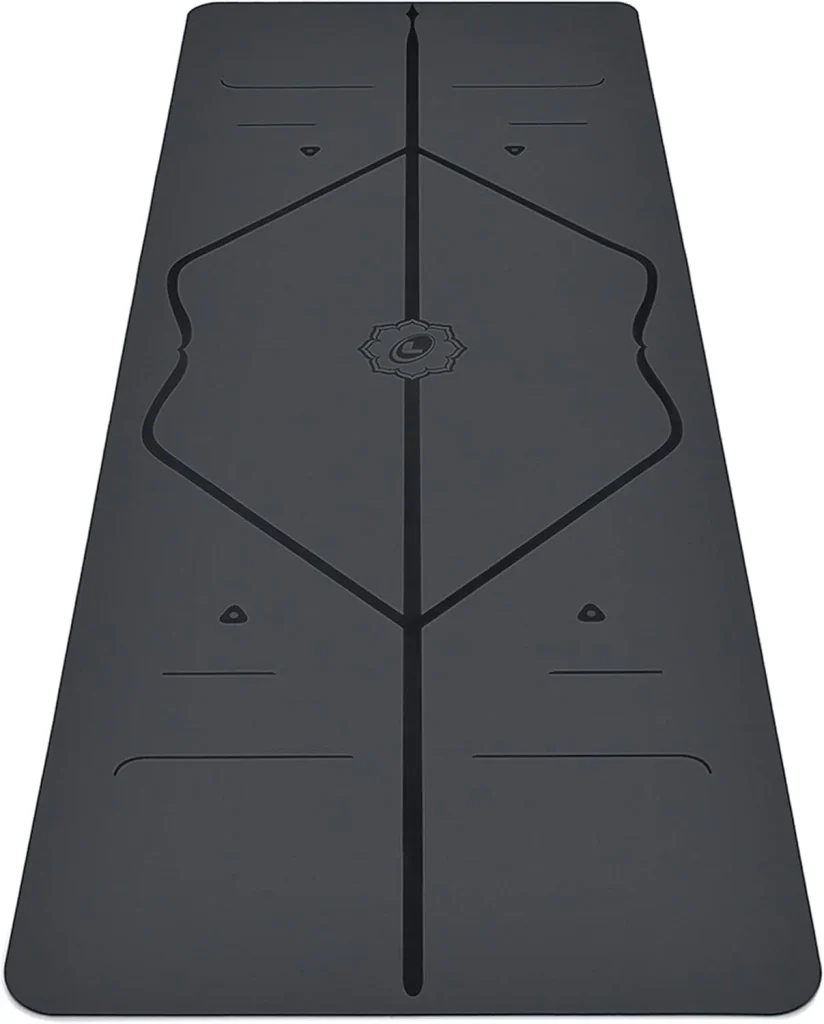
Best for: Grip on soft floors, a natural-rubber base that locks onto carpet fibers where slick decks wander.
- Grippy Rubber Base: Friction that bites into pile instead of skating over it.
- Dense 4.2mm Deck: Compression resistance that floats poses above the fibers.
- AlignForMe Markers: Engraved guidance for home practice without a teacher.
- Extra Width: Nearly twenty-seven inches across for balance work.
- Carry Bag Included: Moves between rooms without a wrestling match.
Pros:
- The strongest carpet-to-mat grip connection in the guide
- Dense build that resists the pile’s compression exactly as designed
- Alignment markers earn their keep in unsupervised home sessions
Cons:
- The steepest rung in the guide
- Thinner than the foam builds for kneeling-heavy practice on deep pile
- Lighter weight gives ground to shag without an underlay
Unroll the Liforme Classic on Amazon
2. Manduka PRO Yoga Mat
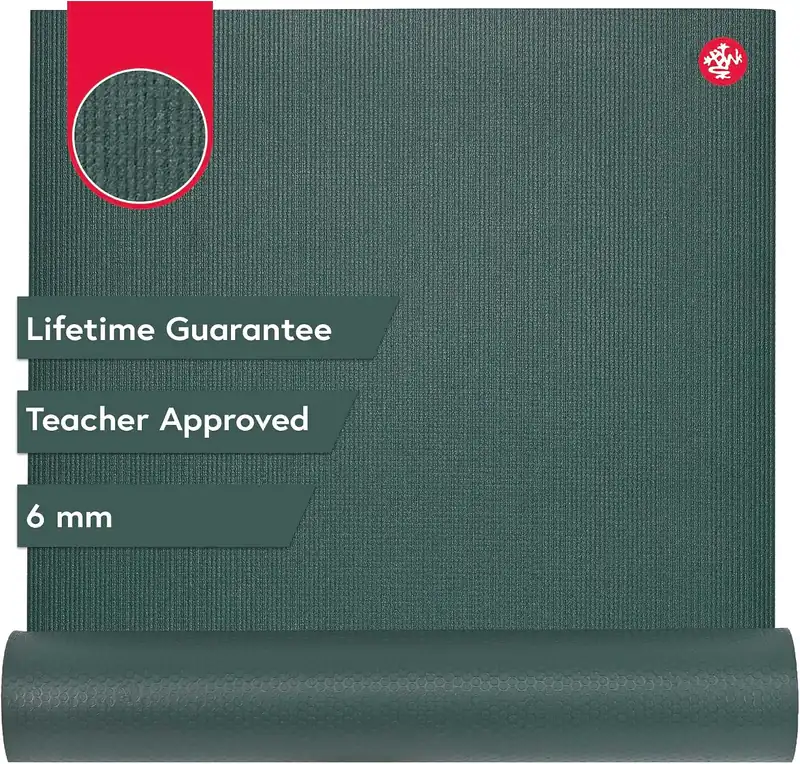
Best for: Lifetime density, a six-millimeter high-grade deck that never lets the floor beneath show through.
- High-Density 6mm Core: Compression resistance tuned over decades of studio abuse.
- Closed-Cell Surface: Carpet dust and lint stay out of the material.
- Lifetime Guarantee: The only mat here backed for life.
- Wide 26-Inch Deck: Balance margin where the floor moves.
- Black Sage Finish: A deep, quiet studio tone.
Pros:
- Density that turns medium-pile carpet into a stable platform
- A buy-once lifespan that survives daily home practice
- Texture that grips both skin above and carpet below
Cons:
- Seven and a half pounds makes rearranging the room a project
- Needs a break-in period before the surface reaches full grip
- Premium rung for a home mat
Shop the Manduka PRO Standard on Amazon
3. ActiveGear Large Yoga Mat
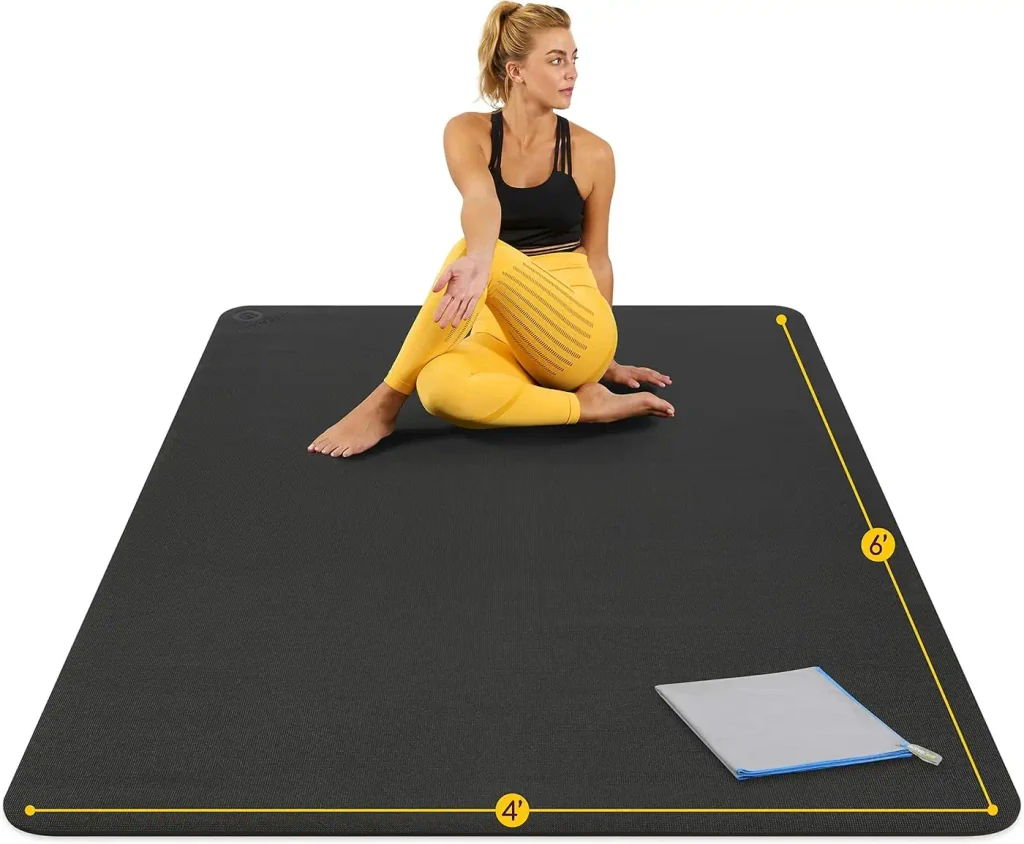
Best for: Oversize home studios, a six-by-four-foot deck that spreads load across the whole soft floor.
- Six-by-Four Footprint: Double the landing zone where edges become safety nets.
- 8mm Extra Thickness: Depth that clears medium pile without sinking.
- High-Density Core: Stability engineering for soft floors and floorwork alike.
- Non-Slip Both Sides: Texture against the carpet and grip beneath the hands.
- Black Utilitarian Finish: Home-gym aesthetics that hide wear.
Pros:
- The most stable platform here for sprawling or double practice
- Load spread that stops edge lift on medium pile
- Doubles as the family workout surface between sessions
Cons:
- Demands a room-sized patch of floor, permanently
- Too heavy for daily rolling away
- Overkill for small spaces and single mat poses
Claim the ActiveGear Large Mat on Amazon
4. Gaiam Essentials Thick Yoga Mat
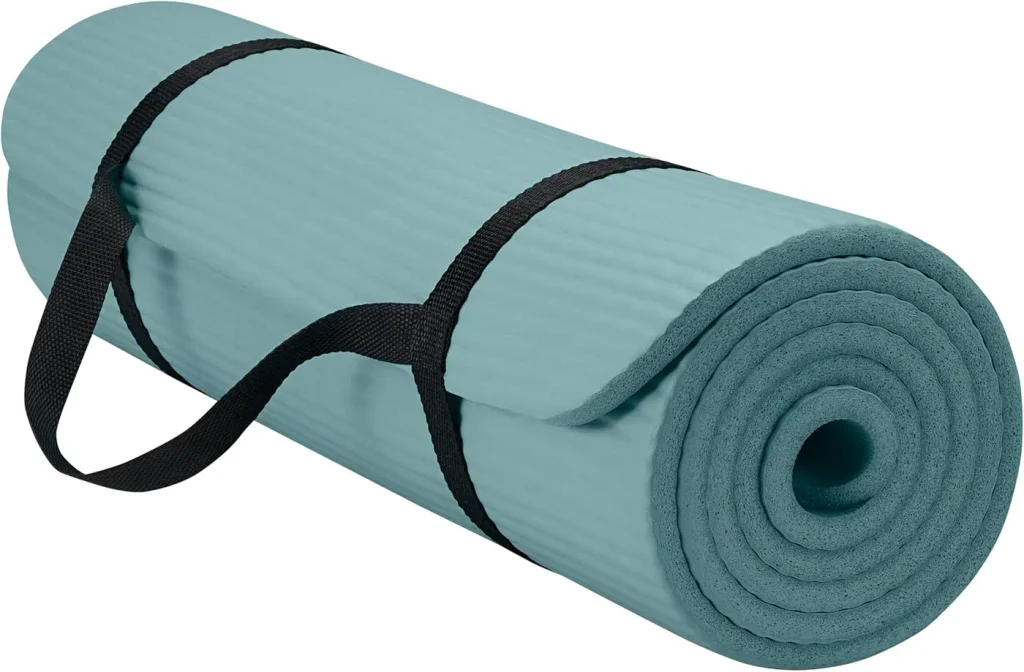
Best for: Deep carpet cushion, a true ten-millimeter deck that floats joints over a punishing pile.
- Full 10mm NBR Foam: The deepest flotation over carpet in the guide.
- High-Density Build: Foam engineered to resist the pile’s compression.
- Easy-Cinch Carrier Strap: Rolls and carries for room-to-room practice.
- Textured Non-Slip Face: Traction over a cushioned core.
- Balsam Colorway: A soft green from the brand’s classic palette.
Pros:
- The gentlest answer to high-pile and tender knees alike
- Massive community feedback behind the comfort claims
- Two-figure rung for genuine depth
Cons:
- Deep foam asks balance poses to work harder
- Standard width only
- Needs flat or loose storage to keep its loft
Grab the Gaiam Balsam Thick Mat on Amazon
5. Gruper Non-Slip Yoga Mat
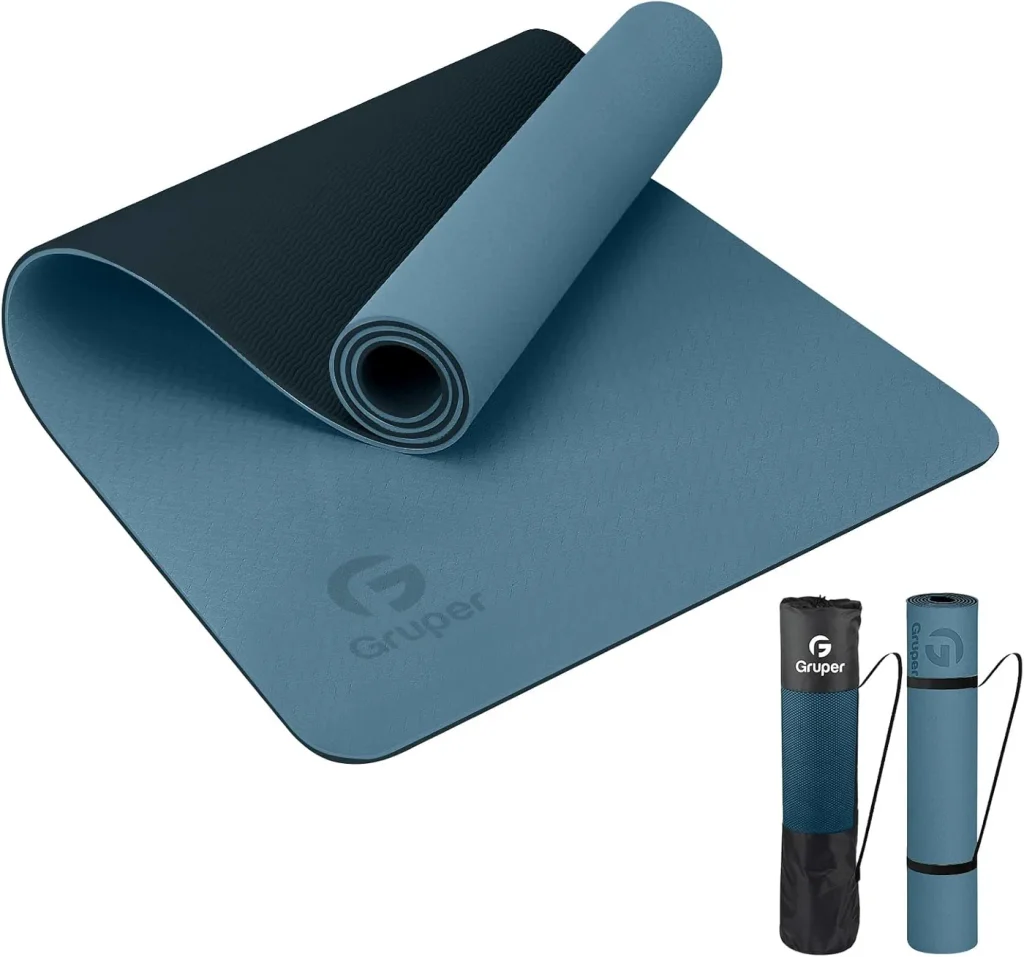
Best for: Two-sided value grip, a dual-texture TPE build that grips carpet and palms for a two-figure rung.
- Double-Sided Textures: One face for the carpet, one for the practice.
- 6mm TPE Density: Mid-depth stability that clears low and medium pile.
- Strap and Bag Included: The complete carry kit in the box.
- Two-Tone Design: Grey blue over black, reversible by mood.
- High-Rebound Foam: Returns to flat after every session on soft floors.
Pros:
- The best accessory bundle at the value end of the guide
- Reversible faces effectively double the mat’s life
- Rebound that survives daily carpet sessions
Cons:
- Six millimeters is the minimum useful depth for plush rooms
- TPE face needs gentler cleaning than PVC
- Standard twenty-four inch width
Try the Gruper Two Tone Mat on Amazon
6. Retrospec Solana Yoga Mat
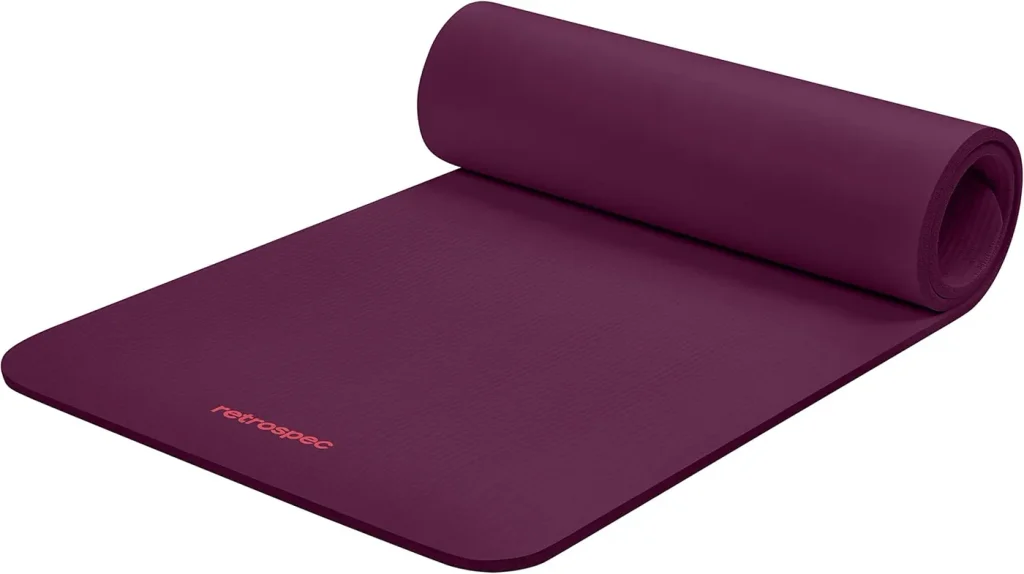
Best for: Half-inch stability, a dense foam deck that cushions without turning carpet into quicksand.
- True Half-Inch Profile: Depth that floats joints and clears the pile.
- High-Density NBR: Firmness that soft decks need and soft mats lack.
- Nylon Carry Strap Included: Cinches the roll for storage between sessions.
- Boysenberry Colorway: A rich purple that anchors a practice corner.
- Ribbed Texture: Grip under palms over the cushioned core.
Pros:
- The depth-density balance most carpet practitioners actually need
- Strong community feedback behind the comfort claims
- Pairs joint relief with genuine stability
Cons:
- Deep foam stores best flat or loosely rolled
- Standard twenty-four inch width
- Surface grip is modest once palms sweat
Settle Onto the Solana Boysenberry on Amazon
7. Fitvids Yoga Mat
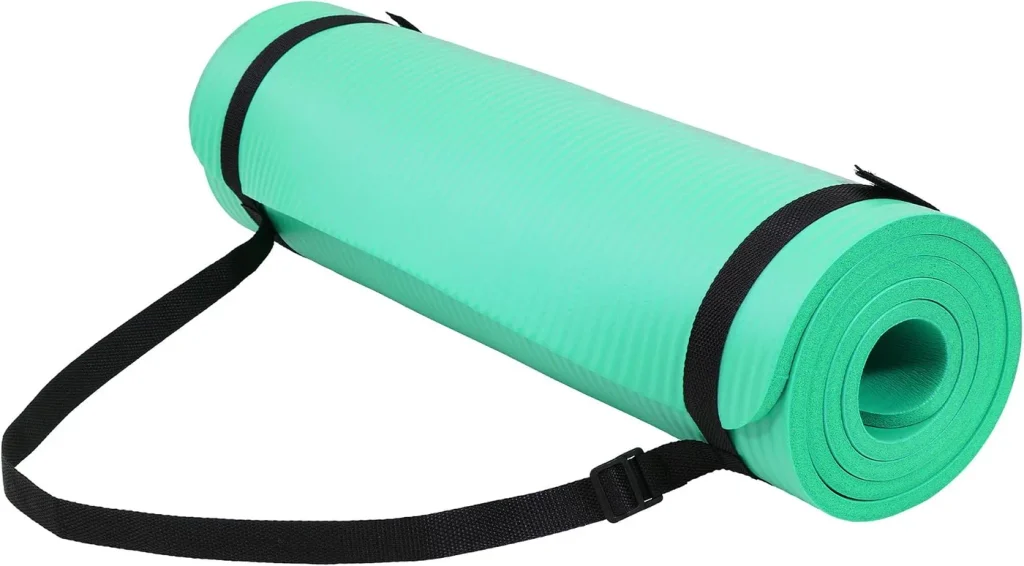
Best for: Proven value density, the guide’s most community-tested build at its lowest rung.
- Half-Inch High-Density Foam: The category’s most validated comfort formula.
- Massive Community Base: Feedback in the tens of thousands and climbing.
- Carrying Strap Included: The two-pound roll travels one-handed.
- Aqua Finish: A bright calm tone for bright rooms.
- Extra Length Cut: Seventy-four inches beyond the standard.
Pros:
- The gentlest rung to genuine carpet cushion
- A track record no other value mat approaches
- Light enough to move around the house daily
Cons:
- Foam compresses sooner than the premium decks
- Grip is functional rather than outstanding
- Utilitarian finish, zero frills
Pick Up the Fitvids Thick Mat on Amazon
8. Circuit Fitness by Marcy Yoga Mat
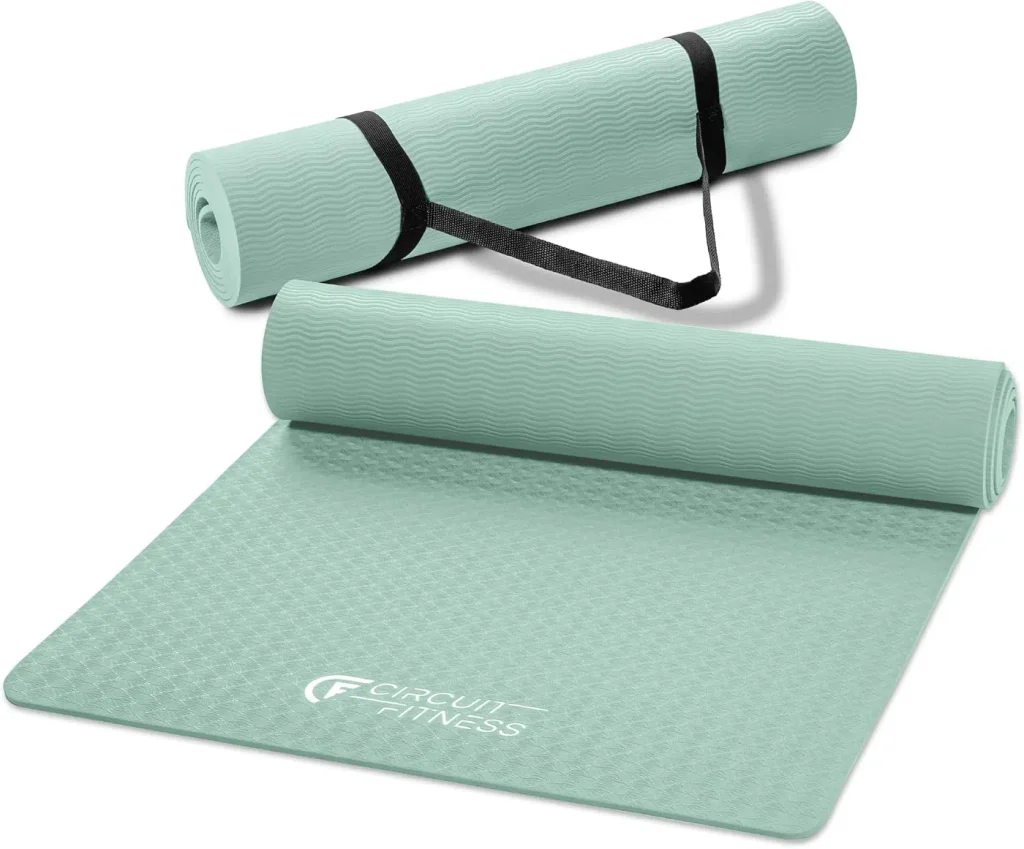
Best for: Compact ribbed grip, a gym-lineage deck with traction ridges that hold on low-pile floors.
- Ribbed Traction Surface: Grooves that grip carpet fibers and palms alike.
- Quarter-Inch Density: A firm, honest platform for balance work.
- Fitness-Lineage Build: Gym-equipment durability from the Marcy house.
- Carrying Strap Included: Rolls slim for closet storage.
- Mint Green Finish: A fresh tone that brightens a corner.
Pros:
- The firmest platform here for stability-focused practice
- Compact roll that lives in the smallest closet
- Fresh listing energy from an established fitness brand
Cons:
- Quarter-inch depth needs low pile to shine
- Firmer than knee-sensitive practitioners may want
- Young listing still building its feedback base
Meet the Circuit Fitness Mat on Amazon
9. WOHAO 7-Fold Yoga Mat
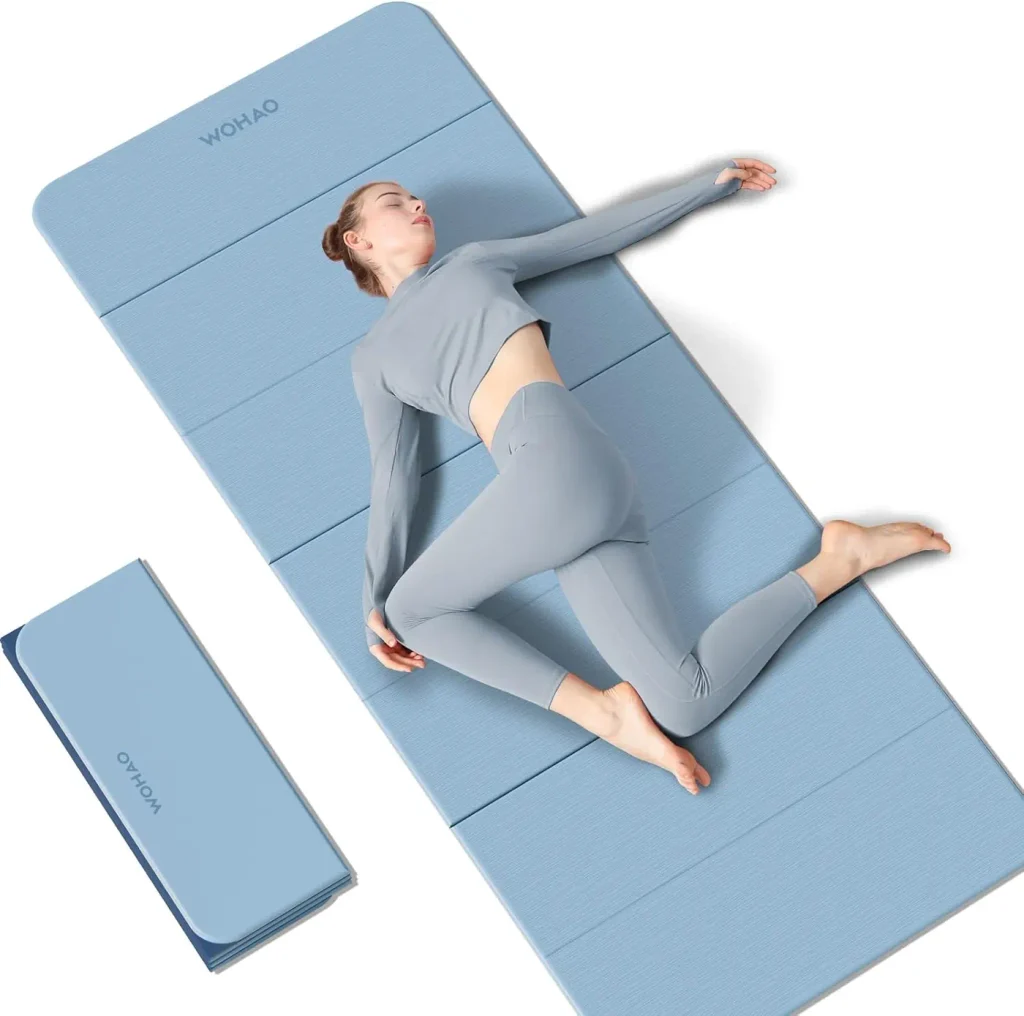
Best for: Fold-away storage, a half-inch high-density deck that disappears into a closet between sessions.
- Seven-Fold Design: Folds to a shelf-sized square in seconds.
- Half-Inch High-Density Core: Carpet clearance with genuine joint relief.
- Two-Tone Blue-Grey Build: Reversible faces for even wear.
- Seventy-Inch Cut With Extra Width: Broader than standard beneath the shoulders.
- Practice-Anywhere Format: Folds into a tote for park and travel days.
Pros:
- The only mat here built for closets and small rooms first
- Half-inch depth that handles medium pile with ease
- Fold format survives repeated packing without memory damage
Cons:
- Fold lines need a moment to relax at every setup
- Seventy inches runs short for taller frames
- Young listing with a growing feedback base
Fold Away the WOHAO Seven Fold on Amazon
Frequently Asked Questions
Q1: Can you practice yoga on carpet without a mat?
A: For gentle, slow practice on low-pile carpet, sometimes, the fibers provide enough friction for standing work. But kneeling sequences quickly punish bare carpet, the pile offers no compression resistance, wrists sink to the subfloor, and sweat turns fibers into a abrasive surface that is hard on skin. A mat adds the stable, clean, consistent layer that carpet cannot, and on anything past flatweave, a dense mat is the difference between practice that feels grounded and practice that feels like a negotiation.
Q2: What thickness yoga mat is best for carpet?
A: Let density lead and thickness follow. On low-pile carpet, a dense four-to-six-millimeter mat is plenty. Medium pile calls for six to eight millimeters of high-density material, enough to clear the fibers without sinking into them. High-pile carpet wants the deepest dense builds available, ten millimeters and up, with the honest caveat that very plush carpet eventually exceeds what any mat can fix. The counterintuitive rule, on soft floors a firm thinner mat usually outperforms a soft thicker one, because it floats the pose instead of continuing the sink.
Q3: How do I stop my yoga mat from sliding on carpet?
A: Flip the problem, on carpet the mat rarely slides so much as the carpet lets it drift, and the fixes are grip and mass. A rubber or heavily textured underside bites into fibers and stops the creep, and heavier mats anchor themselves by weight alone. Positioning helps too, placing the mat so its edges run with the carpet’s direction rather than against it reduces the pile’s push. For stubborn rooms, a mat corner weighted with furniture legs during practice, or a rug pad beneath the mat, ends the drift completely.
Q4: Are thick mats bad for balance poses on carpet?
A: They raise the difficulty honestly, and the combination of soft floor plus deep foam is the hardest balance platform in home practice. The fix is not abandoning depth but choosing dense depth, high-density foam compresses so little under a standing foot that single-leg poses stay honest even at half an inch. Practitioners who mix balance-heavy flows with kneeling work often keep a firm mat for standing sequences and accept the extra challenge, or practice balance near the mat’s edge where the surface is firmest.
Q5: How do I clean a yoga mat that lives on carpet?
A: Carpet trades dust and fibers upward, so a mat that lives there needs a weekly once-over, a wipe with water and a drop of mild soap, then full air dry before rolling. Pay attention to the underside, it collects the carpet’s lint and occasionally its stains, and a quick vacuum pass on the floor side of open-cell builds keeps texture working. Skip solvents on every material in this guide, let the mat dry completely before storage, and the carpet partnership stays fresh for years.
Final Verdict
Carpet practice stops being a compromise the moment the mat underneath is engineered for the floor you actually have. Diagnose the pile, choose density over squish, demand grip underneath, and the softest room in the house becomes the steadiest. If you want the best yoga mats for carpet, don’t overthink it—these are already:
✔ Tested
✔ Reviewed
✔ Proven
Best Overall Pick – Liforme Classic Yoga Mat — Carpet Anchor
Best Budget – Fitvids 1/2″ Extra Thick Yoga Mat
Best Premium – Manduka PRO Yoga Mat — Lifetime Density
Best for deep carpet cushion – Gaiam Essentials Thick 10mm Yoga Mat